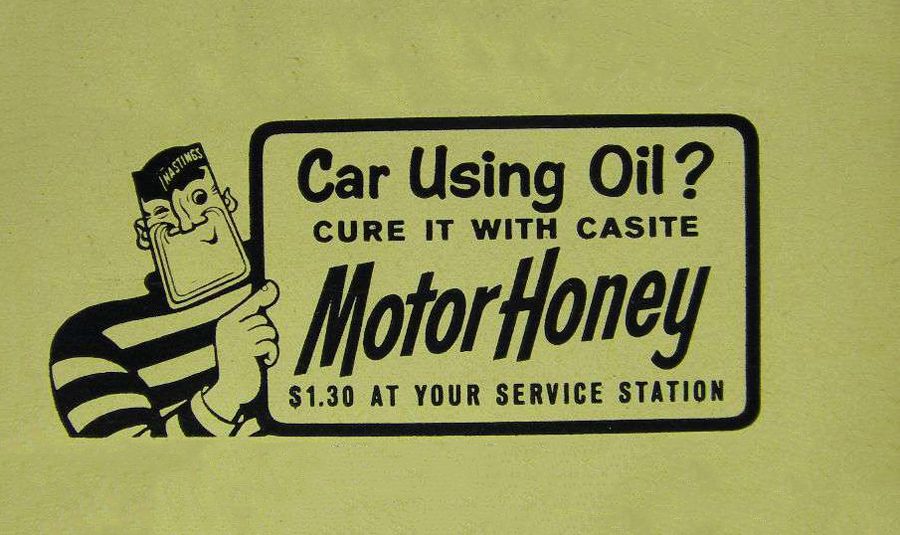

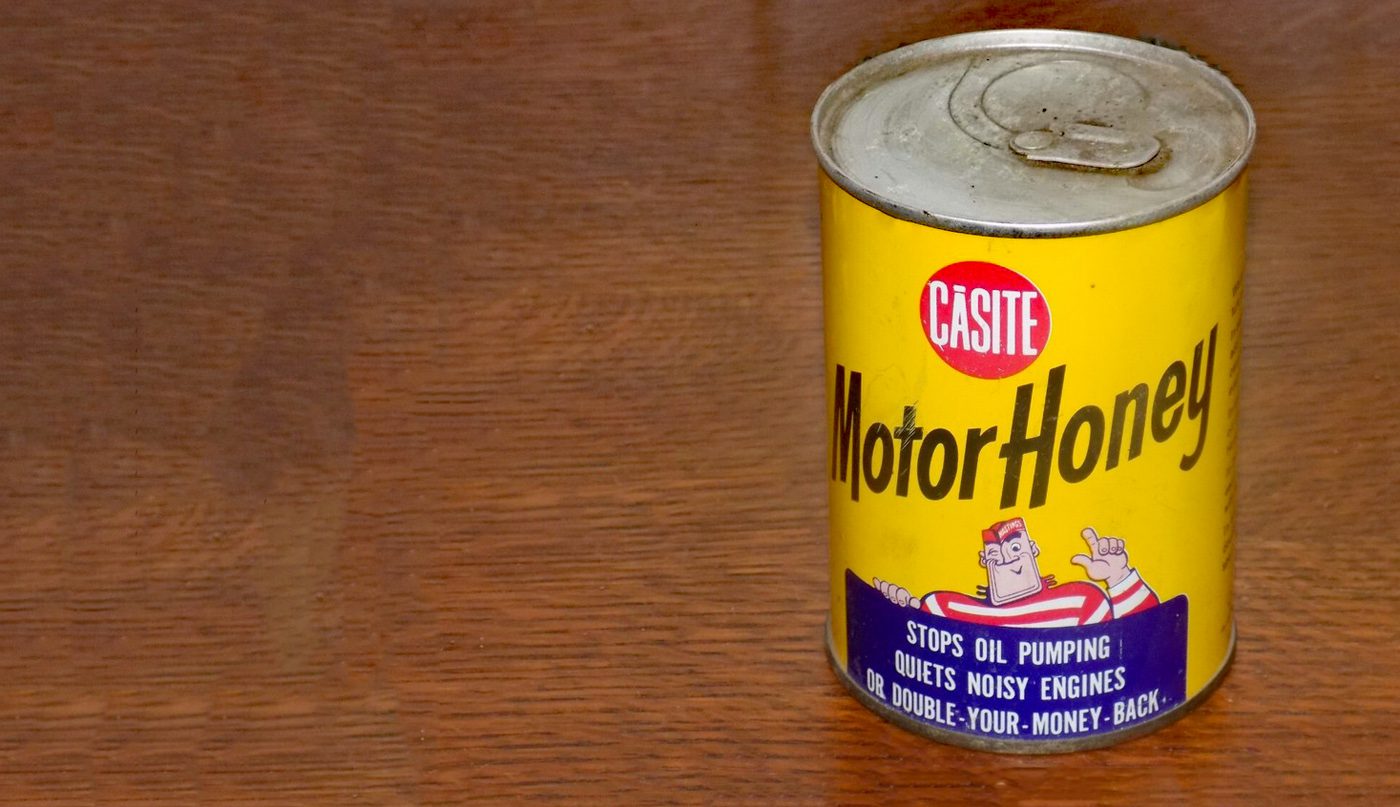
Motor Honey was (and is) a thick engine-oil additive/treatment, primarily marketed as an “oil stabilizer” and viscosity improver for older or worn engines.
What was Motor Honey?
Purpose
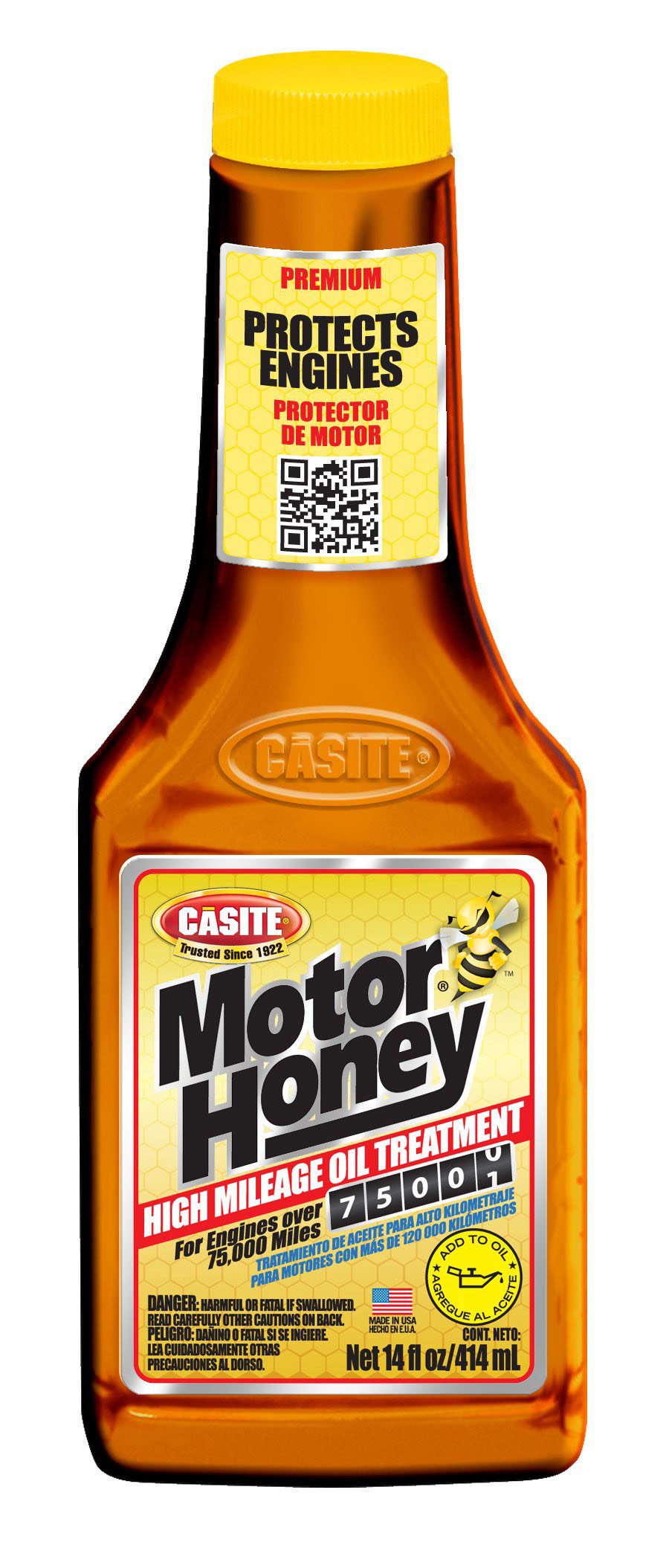
The additive is claimed to help reduce oil burning/consumption, reduce exhaust smoke, quiet noisy lifters, provide generally improved wear protection under high-heat and heavy-load conditions.
All that said, “Honey” has generally been used as a temporary fix for high-mileage engines leaking or burning oil.
How it works
Motor Honey is essentially a viscous substance that increases oil thickness, especially when hot. This high viscosity can temporarily protect end-of-life engines suffering from failing seals and oil leaks by slowing the rate of leakage.
The thickened oil can also reduce noise from failing internal parts including lifers and valves.
Production
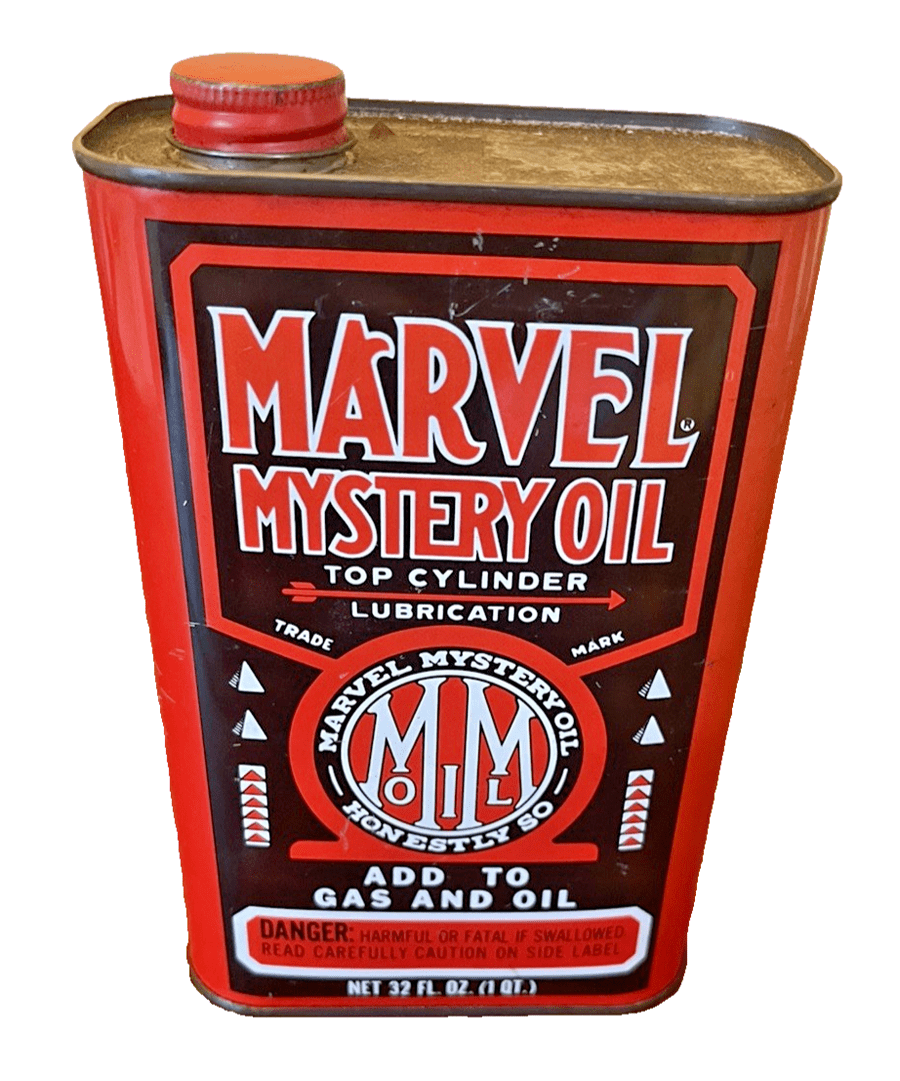
Produced by Casite, Motor Honey has been on the market since the Fifties, and was considered a retail competitor for STP Oil Treatment. This editor remembers desperate car owners also considering the use of a product called Marvel Mystery Oil, which was added to the crankcase AND the gas tank.
Reputation
Worked well as a short-term band-aid for oil burning engines, with plenty of anecdotal evidence to support failing engines producing less smoke—and noise.
Similar to STP
Both Motor Honey and STP are classic high-viscosity oil treatments from the same era. Consumers often compare and cross shop the two additives.
Criticisms
While considered a relatively safe short-term fix for older vehicle engines, most mechanics and engineers agree that the tolerances to which modern engines are built are incompatible with the sludgy thickness of ‘Honey.
CG Says:
And, as noted above, ‘Honey simply masks the symptoms of engine wear, it does nothing to repair the system. And, how well the stuff masks worn-engine symptoms can vary greatly based on specific situations.
Listen to the Car Stuff Podcast
Motor Honey Pictures
(Click below for enlarged images)