

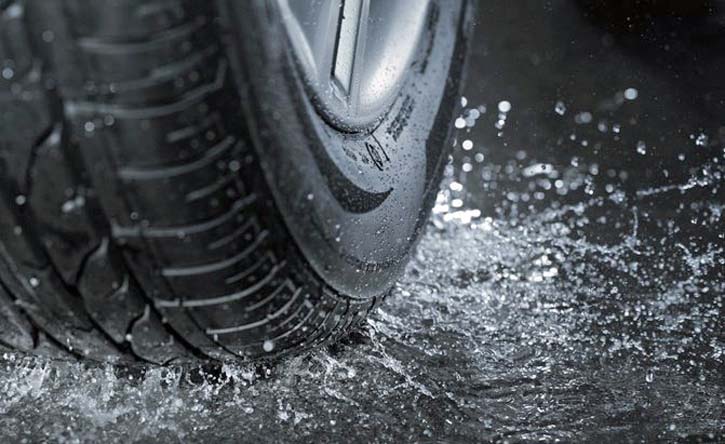
If you’re old enough, you may recall being taught to “pump the brakes” in the event you found yourself driving a vehicle that had entered into a slide or skid, this because the wheels had locked up and stopped spinning.
What Are Anti-Lock Brakes?
Breaks Locking Up
The problem is that wheels that stop spinning cannot be employed to slow or turn a vehicle—this because they have no traction. But, by pumping the brake, the wheels are free to spin again, offering some degree of control. Or, at least, more control than if they were locked up.
Pumping the Brakes
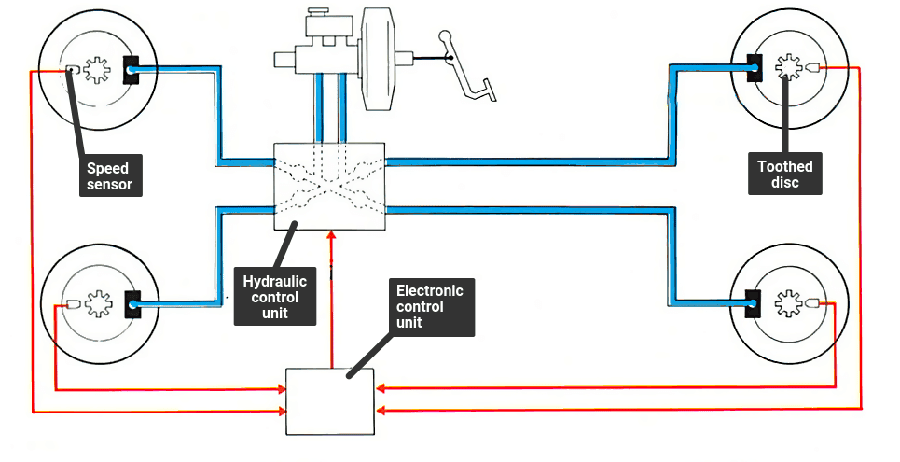
While pumping the brakes is (was) a tried-and-true method of regaining control of a vehicle, anyone who has employed the method can tell you that a limiting factor of the process is how quickly a human driver can actually apply the brakes in a given period of time. And generally speaking, it’s not quick enough.
For this reason, carmakers developed the anti-lock brake system (ABS), a technology that—when necessary—handles the brake pumping for the you.
Anti-lock brake systems are especially effective because of how quickly they can pump the brakes. While a human drive can manage perhaps one pump of the breaks every second, ABS can manage 10-15 pumps in the same time. This increased pumping speed helps improve traction, and thus steering and brake control.
ABS History
First seen way back in 1971 on the Chrysler Imperial, the safety system was considered effective, but at $351.50, the option was pricey (about $2800 today) and was ordered on just five percent of Imperials. Chrysler dropped the option after the 1973 model year.
The first modern ABS implementation came in 1978, when it was installed on the Mercedes-Benz flagship S-Class. This system was also pricey, but won acclaim for its effectiveness. By the mid-Eighties, ABS systems were becoming more affordable, and more common.
Interestingly, ABS systems were never federally mandated, though many carmakers were quick to make the technology standard equipment—a thing which often reduced a vehicle owner’s insurance costs.
ABS and the Law
Though ABS was never required by law in the U.S., stability control systems were mandated in 2012. As stability control systems—which can help keep a vehicle on its intended course in the event of a loss of traction—use many of the same components as ABS, the law effectively made latter standard on all new light-duty vehicles as well.
Using ABS
The pulsing of ABS in action can be felt through the brake pedal, and can be alarming the first time a diver experiences its use. Despite any impulse you may feel to lift off the brake, continue to depress the pedal until you have slowed or stopped as you had intended. And remember, Do NOT pump the brakes—that’s the car’s job now.
Thanks to advances in technology, ABS has become a cheap and effective way to supplement the efficacy of modern braking systems, and is standard on all new light-duty cars and crossovers sold in the U.S.

Listen to the Car Stuff Podcast
What Are Anti-Lock Brakes? Pics