
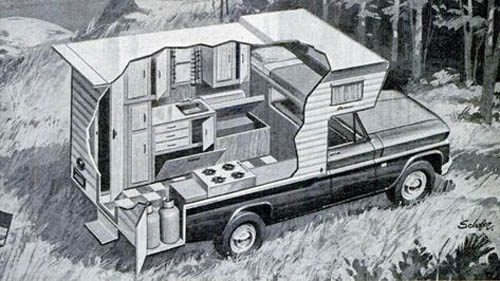
Long before there was Airbnb, and well before we expected holiday lodgings to include WiFi, a strange, short-lived, and ultimately charming vacation option presented itself to folks with at least a little wanderlust…and a full-size pickup truck. What was a Camper Special?
Slide-in Campers
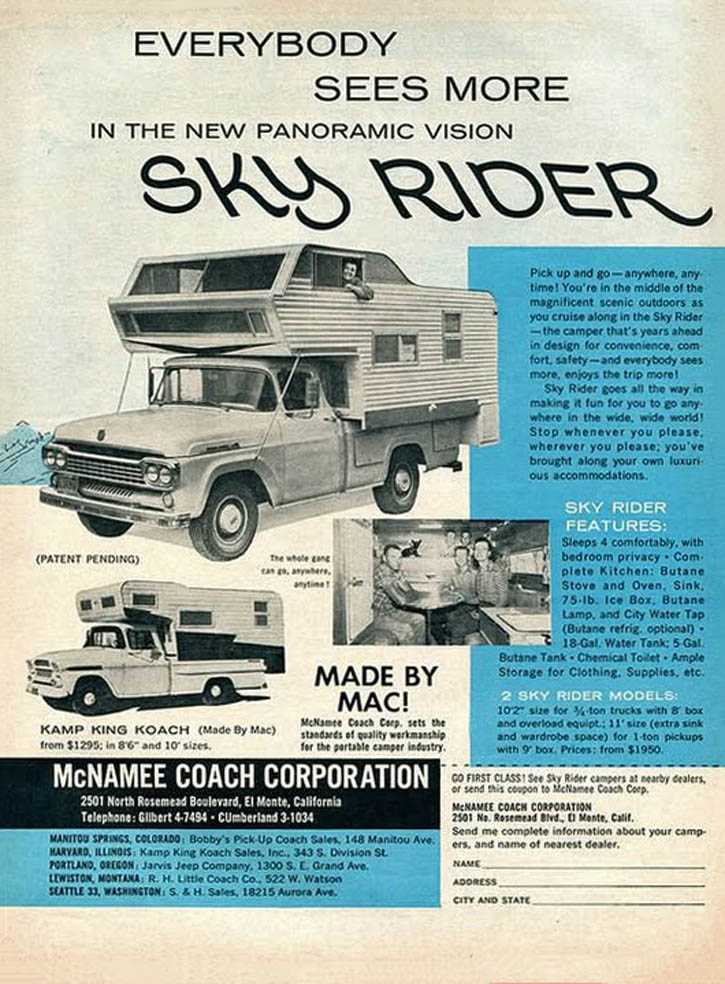
They were called slide-in campers, and they were designed to fit in the bed of a pickup with little modification to the truck. Long-bed campers offered roughly 50-square feet of space, and depending on layout, sleeping accommodations for between 2 and 4 people. Many of the campers were fitted with self-contained toilets, and occasionally plug-in air conditioning, tough the latter was rare. A kitchenette was usually part of the deal, as well.
Camper Specials
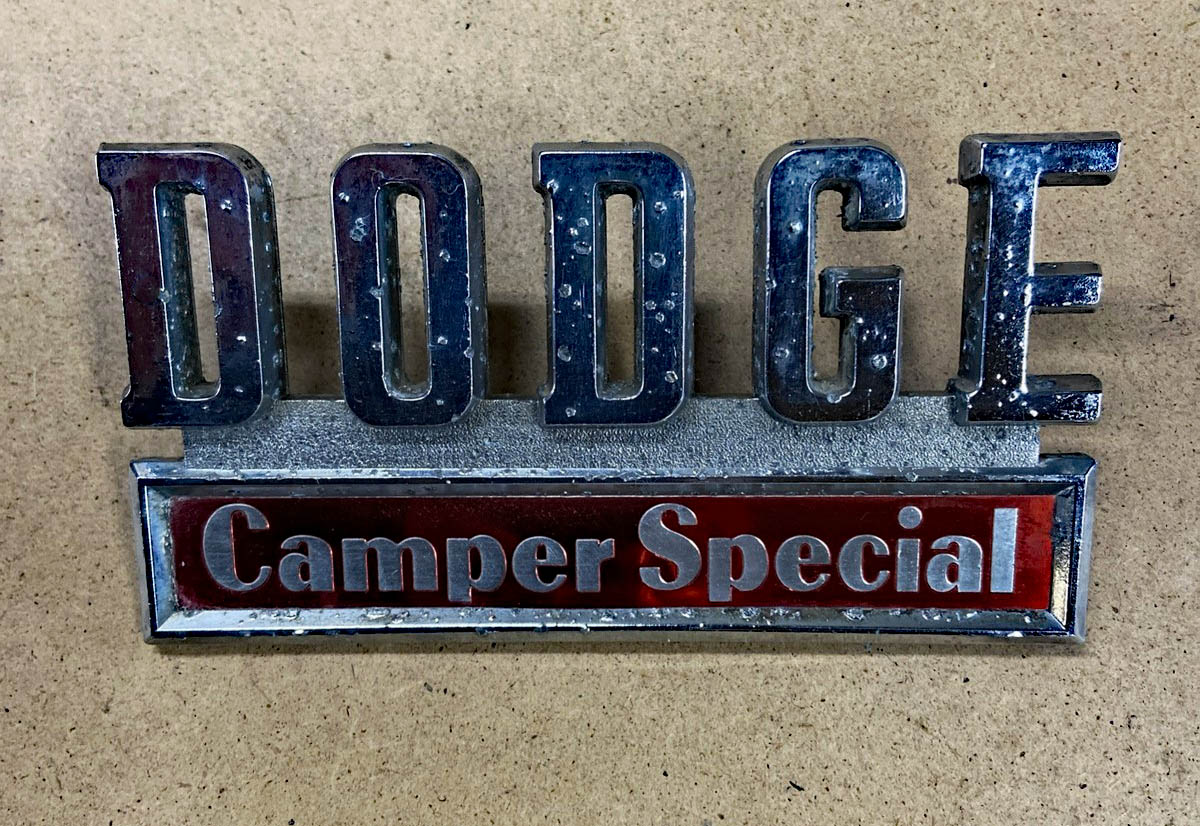
Slide in campers became popular in the mid-Sixties, and remained so for roughly a decade. To meet the specific needs of slide-in camper owners, pickup-truck builders began offering specific camper packages and trim levels. Include among them:
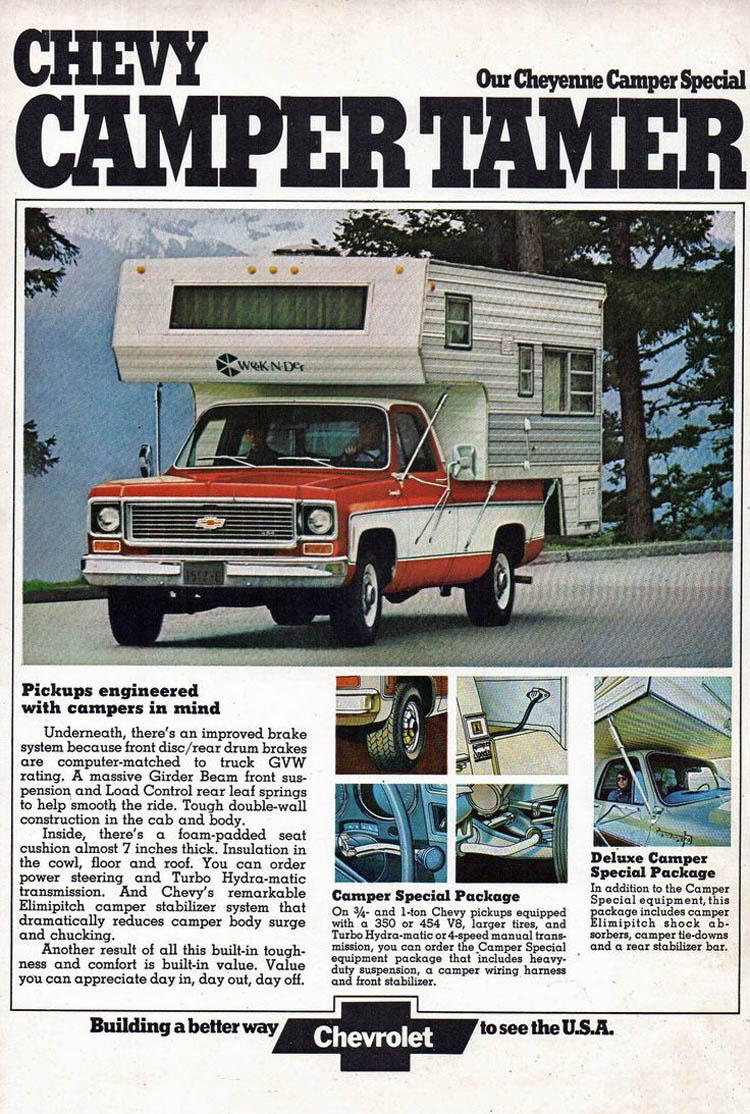
- Chevrolet: Longhorn/Custom Camper
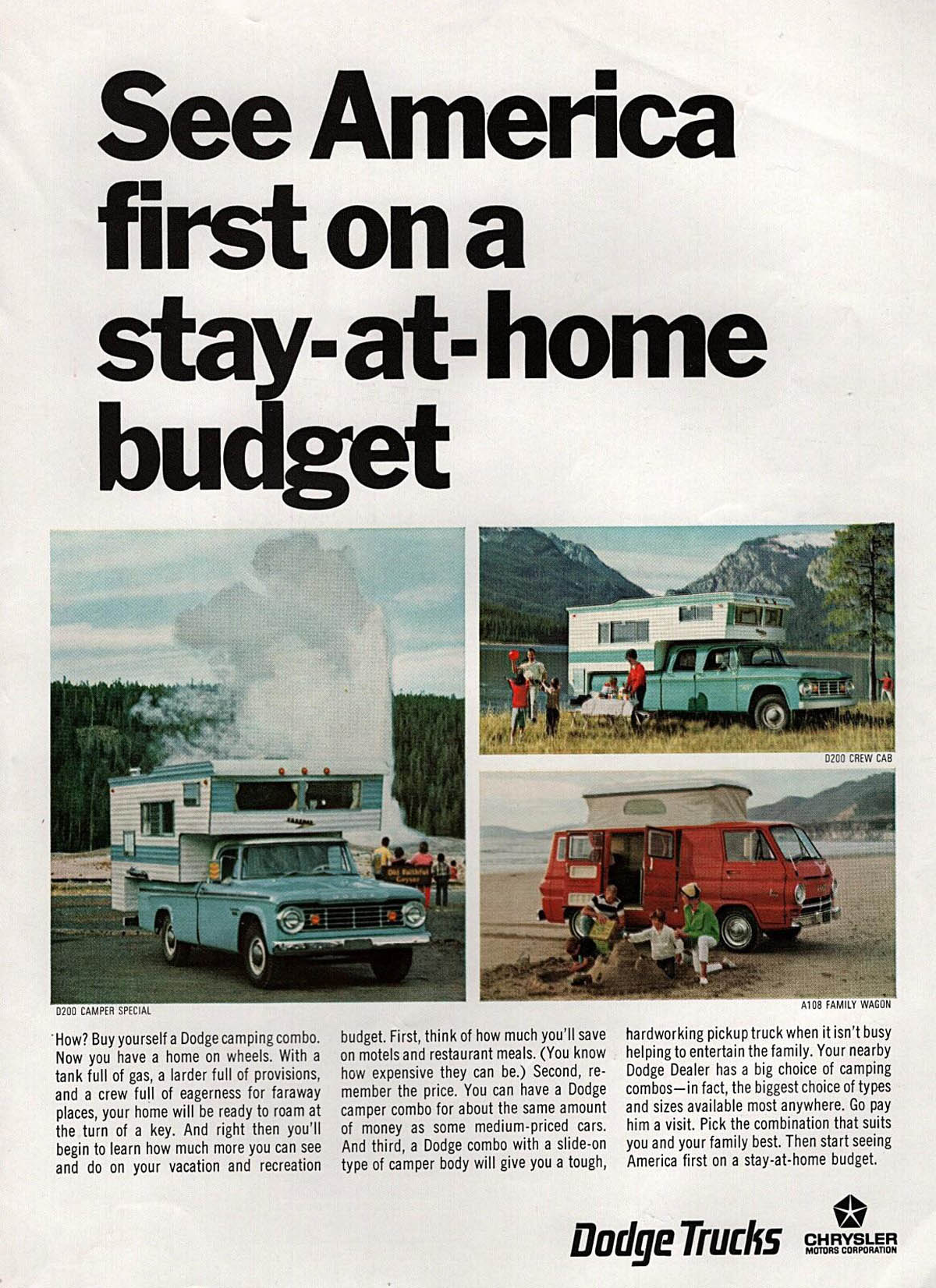
- Dodge: Camper Special/Adventurer Sport Camper
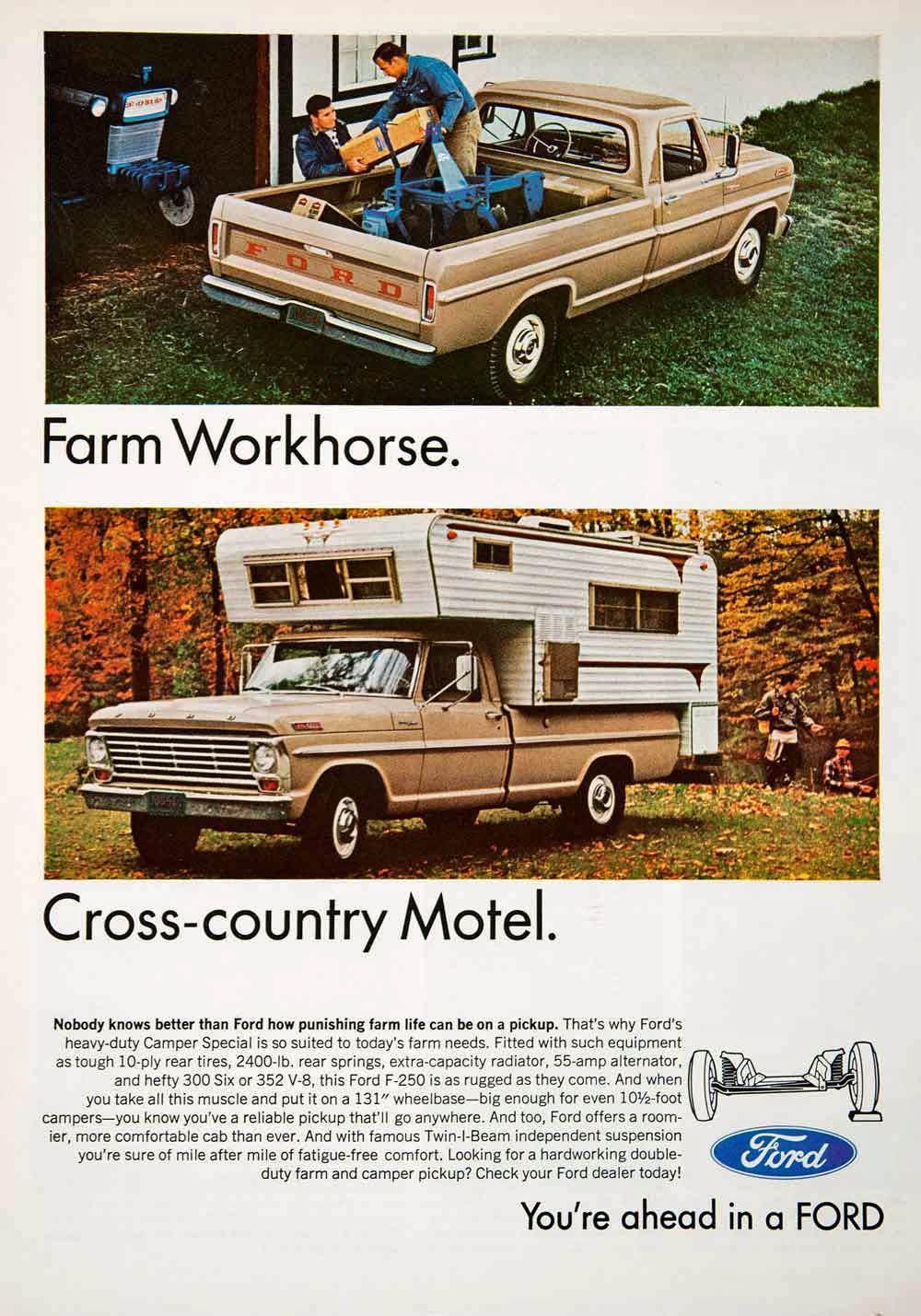
- Ford: Camper Special/Super Camper Special
- GMC: Custom Camper
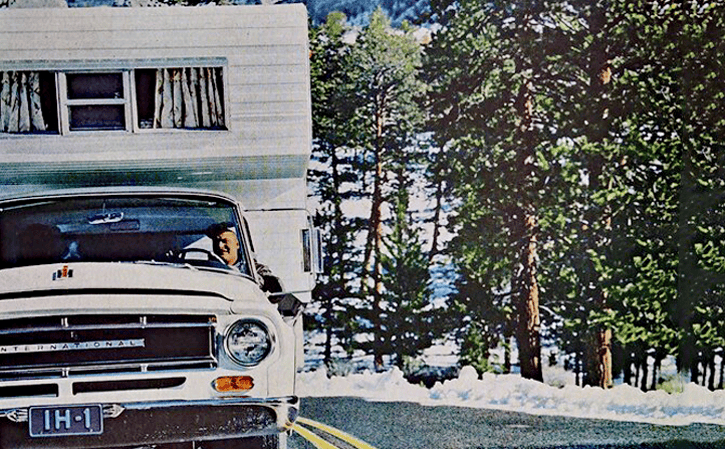
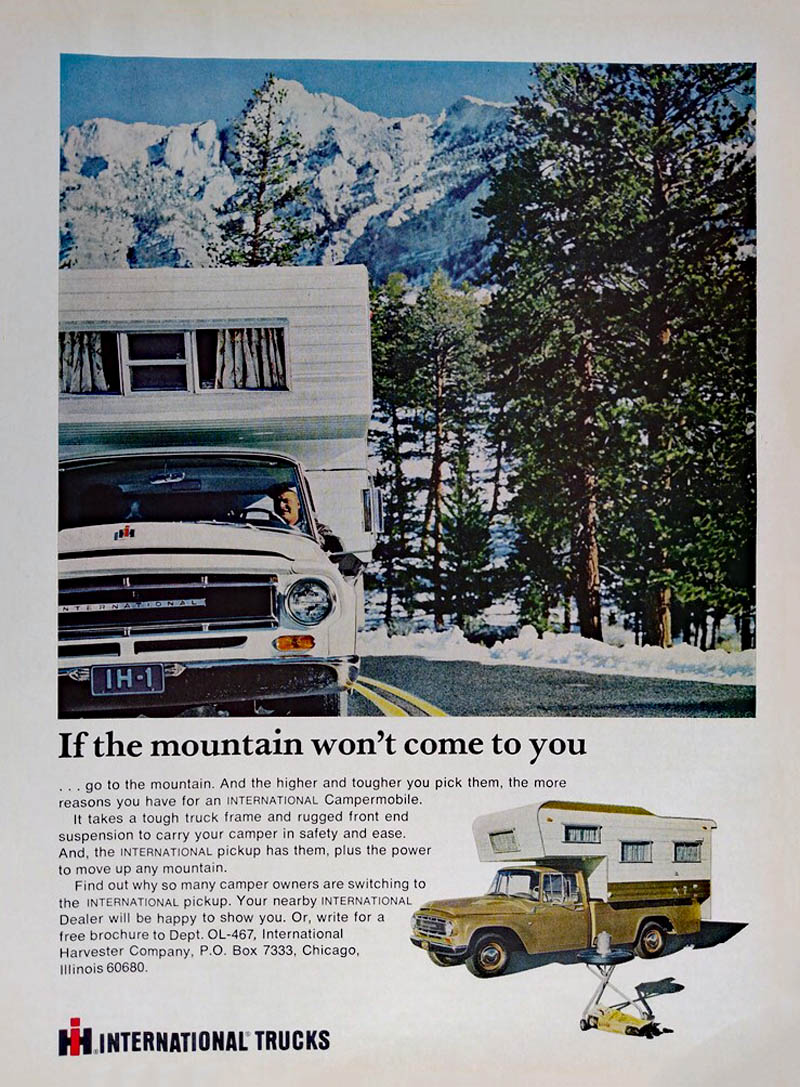
- International: Campermobile
Broadly, these pickups were referred to as “camper specials,” and served well consumers looking to avoid hotels and tourist traps.
Equipment
These model/package names would change over time, but the general gist was that the trucks were specially upgraded to support operation with a slide-in camper. Surprisingly, perhaps, there was actually a great deal of equipment included on these camper-ready pickups. Here are some of the most-common bits:
- Extended wheelbases
- Reinforced frames
- Heavy-duty springs, shock absorbers, and stabilizer bars
- Upgraded electrical systems
- Dual batteries
- Dual fuel tanks
- Larger mirrors
- Tie-downs and exterior fasteners
- Special badges and/or decals
Suspension
Suspension upgrades served not only to accommodate the weight of the slide-in camper, but also to help maintain control in cornering. The camper’s mass, much of which was located near or above the cab, increased the likelihood of a rollover incident during hurried cornering. Chassis upgrades, such as heavy-duty stabilizer bars, helped to mitigate lateral weight transfer during aggressive handling maneuvers.
Prices
The “special” models and options packages did not add considerably to the price of a new pickup, generally on the order of $200-$500 depending on the equipment included. Because of the weight of the slide-in camper, camper-special equipment was largely confined to heavier-duty ¾-ton and 1-ton trucks, as ½-ton models were just a little under-built for mobile hotel-room duty.
Camper Makers
The slide-in camper units themselves were produced by a number of companies, the names of which you may recognize:
Alaskan Campers—Founded in the late 1950s; known for hard-side hydraulic pop-up designs suited to harsh conditions
Adventurer—Started 1969; longtime producer of hard-side campers
Lance—Established 1965; became one of the longest-running and most prominent hard-side slide-in camper producers
Starcraft—Partnered mostly with Ford on the “American Road” camper series
Travel Industries—Known mostly for the International Campermobile
Camper Prices
By the early Seventies, a nicely outfitted slide-in camper started around $3500, coming close to doubling the price of a bare-bones new pickup truck.
Note that many owners chose to remove the camper body for the off season, leaving the truck available for regular pickup-type work. It was not uncommon back in the day, especially in rural communities, to see slide-in camper units stored next to a driveway mounted on a purpose-built stand.
Sales Decline
Slide-in campers fell out of vogue by the end of the Seventies, and truck makers stopped producing camper specials around that time.
Whether for care-free holiday travel, or for temporary job-site housing, the slide-in camper was a unique, alternative-think solution to staying at pricey, and often inconveniently located, commercial lodging. This author is old enough to remember regularly seeing slide-in campers on a regular basis, even around Chicago.
Today
Note that several companies (Alaskan Camper and Lance, for example) still produce slide-in campers, though there are no published numbers as to how many are sold annually. We suspect the number is very small.
Listen to the Car Stuff Podcast
Camper Special Pictures
Click below for enlarged images