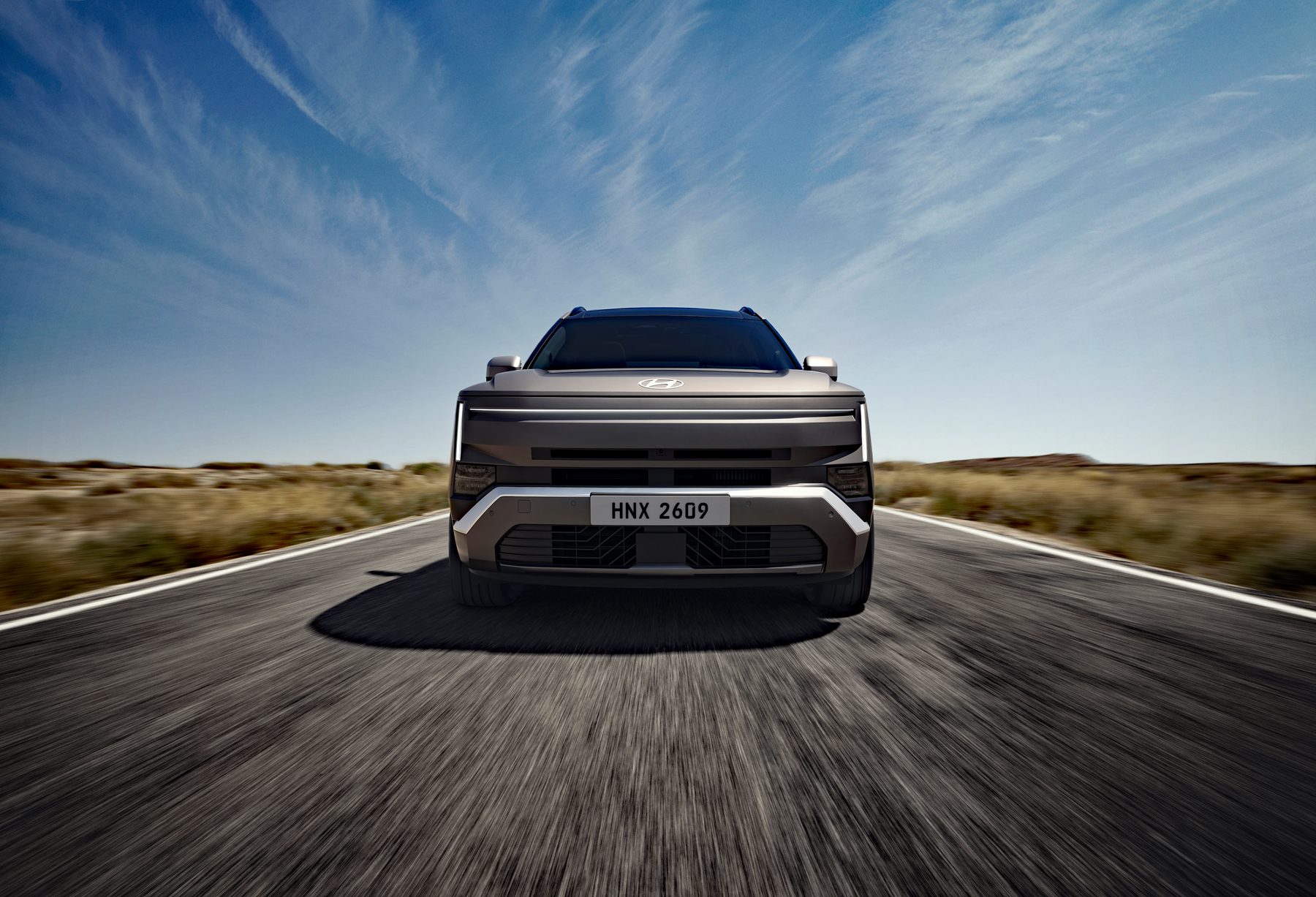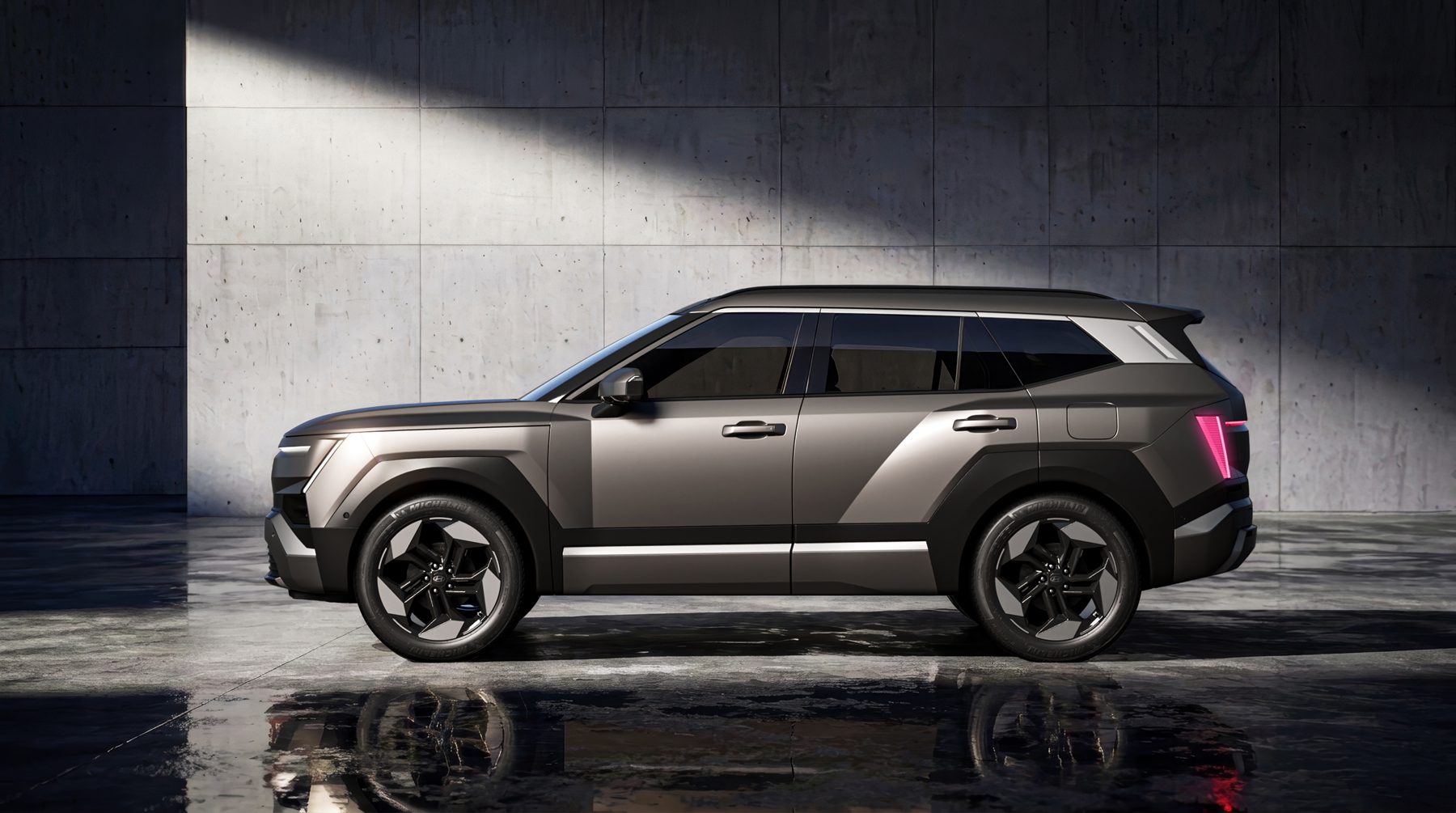

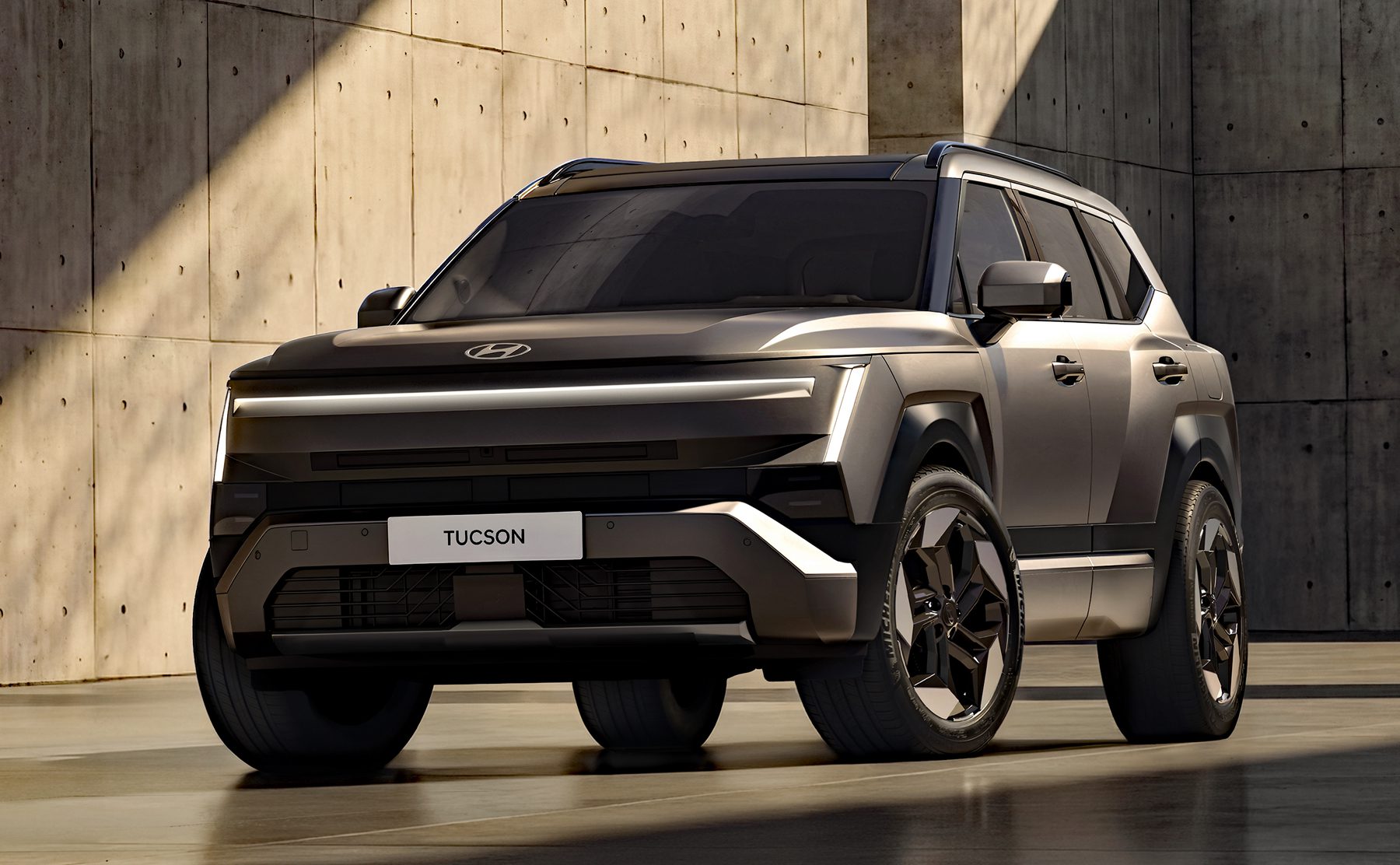
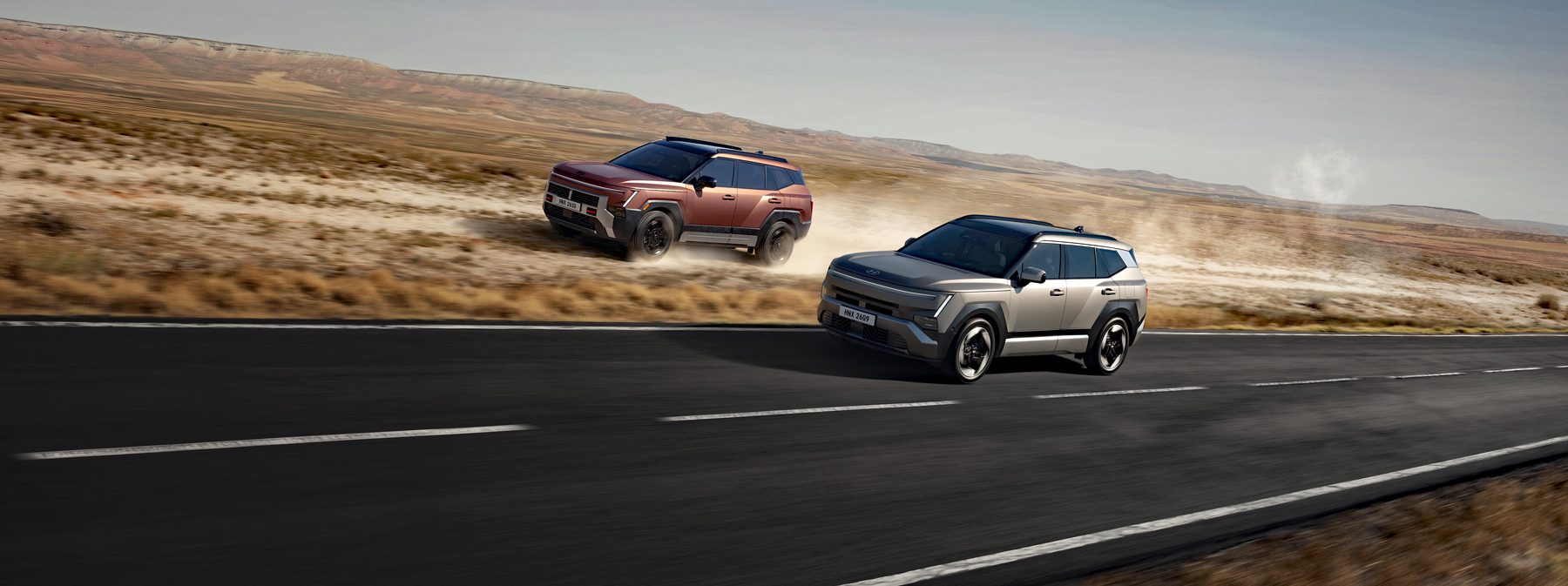
NEW YORK, New York—Hyundai revealed the next-generation Tuscon this week, and it looks nothing like the outgoing model. It has a chunky futuristic vibe, and the new lighting signature bears a strong resemblance to the brand’s all-electric Ioniq 9. Hyundai calls the new design philosophy embodied by the 2027 Tucson “Art of Steel.”
Outside of the bold new look, the 2027 Hyundai Tucson has a lot going on. Here are the five biggest things to know:
2027 Hyundai Tucson revealed: 5 things to know
The 2027 Hyundai Tucson gets more…
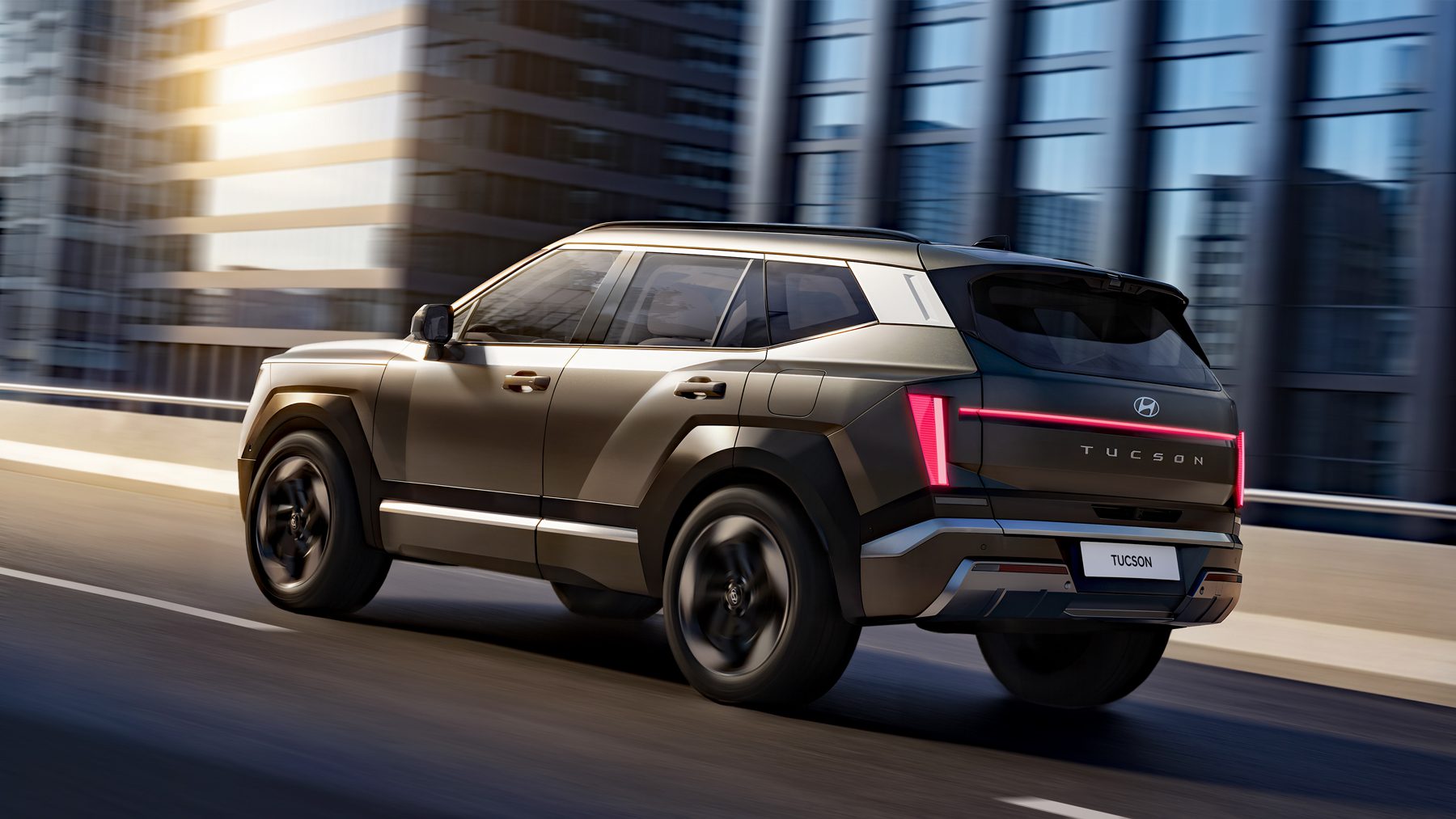
As seems to be the case with most next-generation vehicles, the 2027 Hyundai Tucson gets more space and more stuff. It’s 2.4 inches longer, 2.6 inches wider, and 0.8 inches taller than the out-going model. This translates to more passenger and cargo space. In fact, the cargo area behind the back seat grows by 3 cubic feet.
Also improved are hybrid fuel economy, all-electric range in the plug-in hybrid (PHEV) variant, and towing capacity. Hyundai is targeting 42 mpg for the hybrid (up from 38 mpg), and 50 miles of electric range (up from 32 miles) for the PHEV. Max towing capacity also increases from 2,000 pounds to 3,000 pounds.
What’s more, the new Tucson adds an available dual wireless phone charger, up from just a single-charge unit.
The gargantuan screen trend continues
The infotainment screen in the current Tucson measures 12.3 inches. For 2027 the base model gets a 12.9 inch screen and an available Tesla-like 17-inch screen. Rather than the mono-screen that stretches from gauge cluster to the infotainment unit, we now see the big tablet slapped on the middle of the center stack, and the digital cluster is now a narrow 9.9-inch driver display.
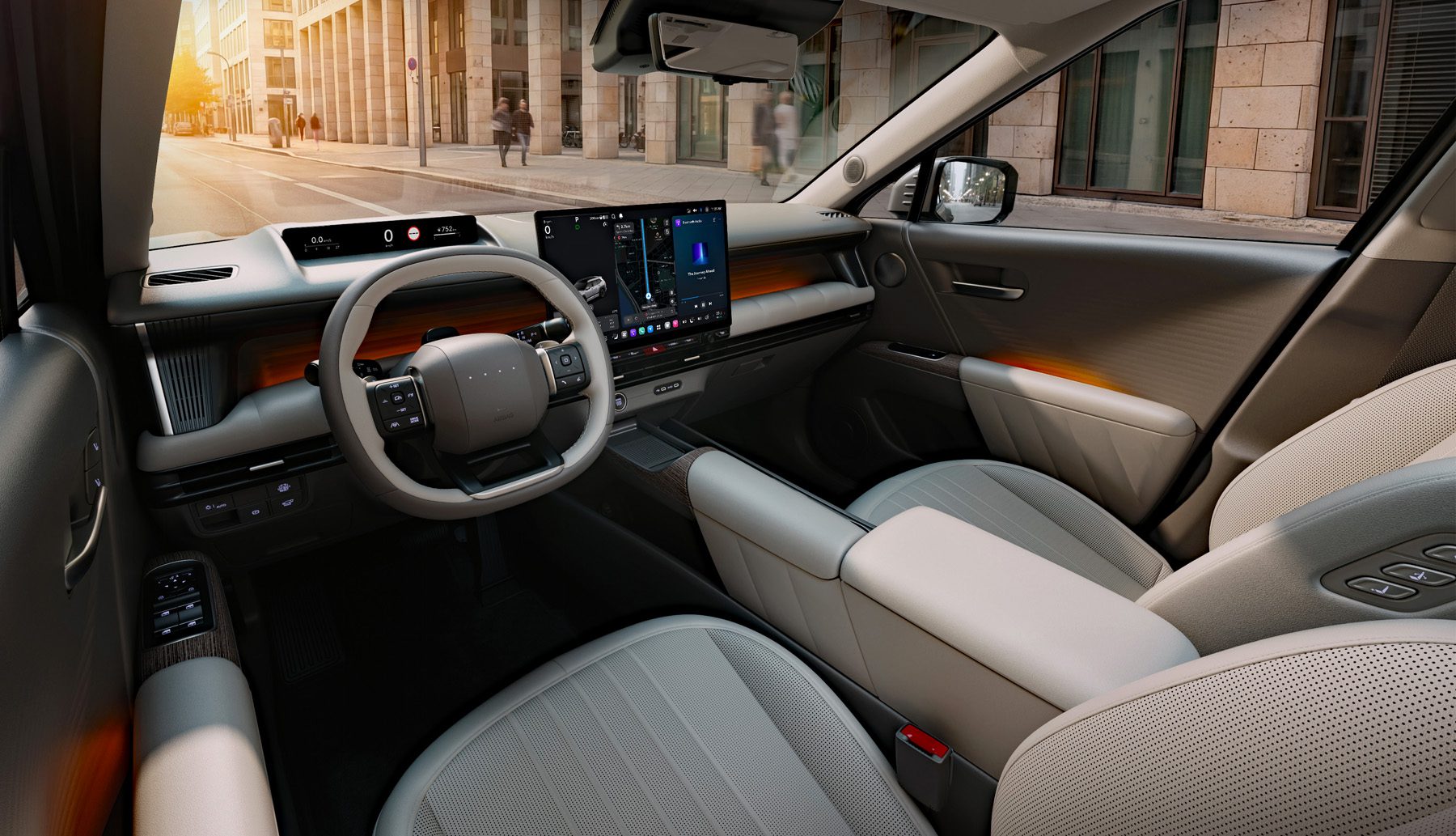
The big(ger) news here, however, is that the 2027 Hyundai Tucson debuts its new Pleos Connect infotainment system in the U.S. This is an Android Automotive-based system, and it houses a lot of vehicle functions within the screen. Hyundai does retain a few hard-touch buttons for key functions. Even though this is a Google-based system, the new OS still allows for wireless Apple CarPlay and Android Auto. It also introduces Gleo agentic AI that uses natural language requests.
2027 Tucson introduces off-roady XRT Pro
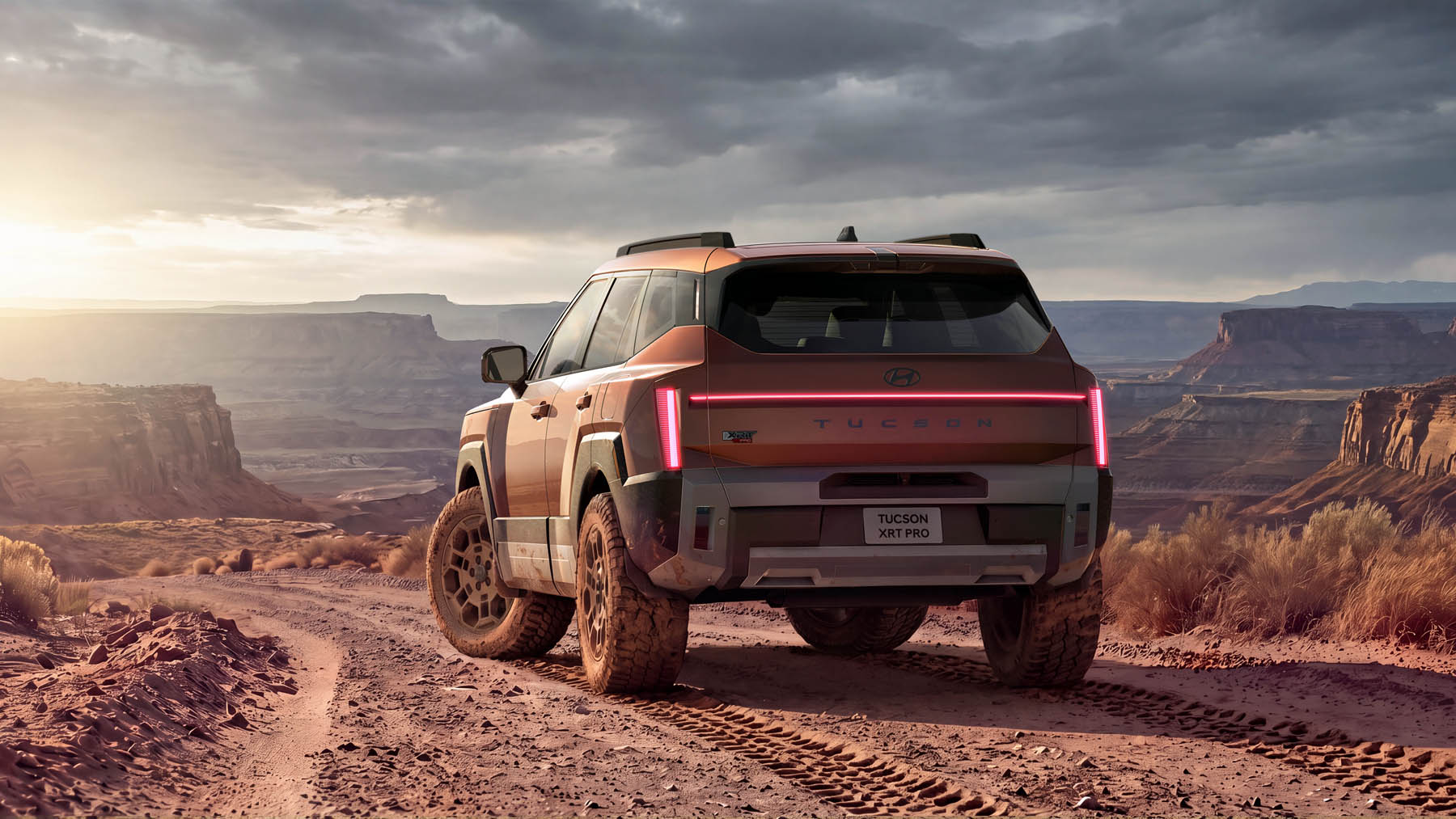
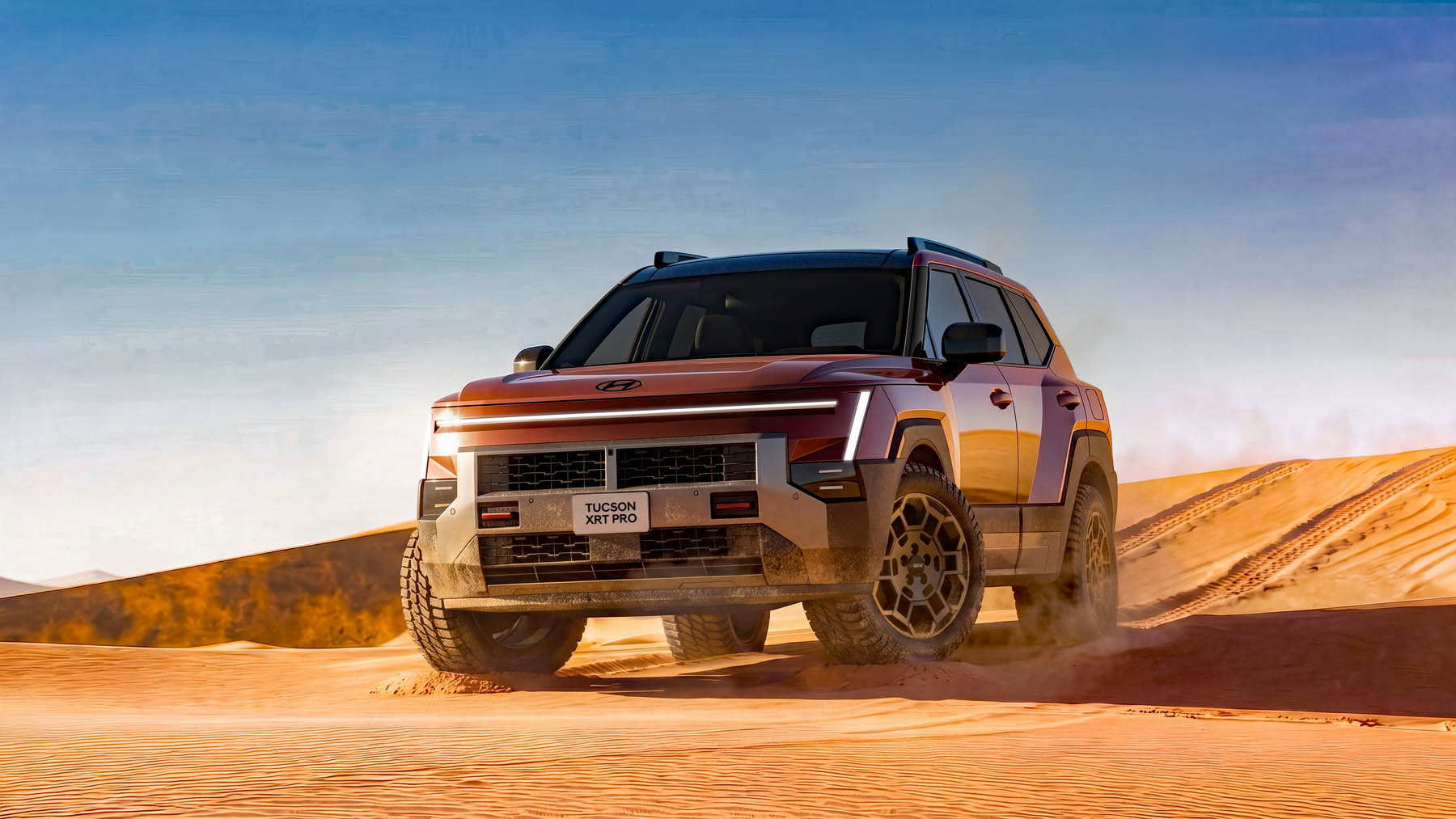
Though the Tucson lineup previously had an off-road-ish XRT model, it now gets an uber off-road version: the XRT Pro. This trim comes standard with all-wheel drive, all-terrain tires, aggressive approach and departure angles, and front recovery hooks. It also gets extra body cladding to protect it from the elements as well as exclusive badging and seat patterns.
The big new thing the XRT Pro gets, however, is Smart Terrain Assist, which analyzes terrain on the fly and provides a “stuck” score for the upcoming conditions. It also gets Target Speed Control, which is low-speed cruise control that allows the driver to focus on driving while the vehicle focuses on power delivery.
The gas, hybrid, PHEV strategy remains
Though the powertrain options don’t change in the 2027 Tucson, the power does. All versions of the Tucson—be it gas, hybrid, or plug-in hybrid—are all powered by a version of the makers 1.6-liter turbocharged engine. So, the old 2.5-liter 4-cylinder is gone, and the gas model now gets the 1.6-liter turbo delivering 184 horsepower, which is 3 horsepower less than the outgoing engine.
Though the hybrid previously had a 1.6-liter turbo, Hyundai is calling this a next-generation hybrid system that offers an HEV Stay Mode, enabling drivers to run things like the climate- and audio system with the engine off. The hybrid system delivers a combined output of 233 horsepower (up 2 horsepower from the previous generation). The PHEV also gets the 1.6-liter turbo paired with the plug-in hybrid system, and it now promises about 50 miles of all-electric range.
It’s available next year
While we have a lot of information about the 2027 Hyundai Tucson, we’re still missing a few key details. We know that the new Tucson will be available in Korea by the end of 2026, but it won’t roll out to the rest of the global market until next year. We do know that the PHEV will arrive after the gasoline and hybrid models, however. But we have no word on specific timing, and we have absolutely no idea what the pricing will look like. We can make some guesses based on the current model, though. Knowing that the current Tucson SE starts at $31,350, including destination, we anticipate a slight increase and think we’ll see the 2027 Tucson start around $33,000.
CG Says:
While this is a radical departure from the current Tucson design, this new direction keeps in line with Hyundai’s overall recent design strategy: Form must follow function. We’ll see how we feel about yet another big screen that manages a lot of vehicle functions. But we do like the idea of some physical controls.
We personally can’t wait to get that XRT Pro in the dirt.
Listen to the Car Stuff Podcast
2027 Hyundai Tucson Pictures
Click below for enlarged images