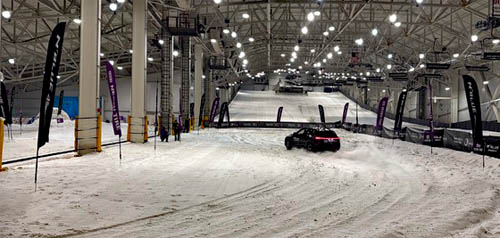

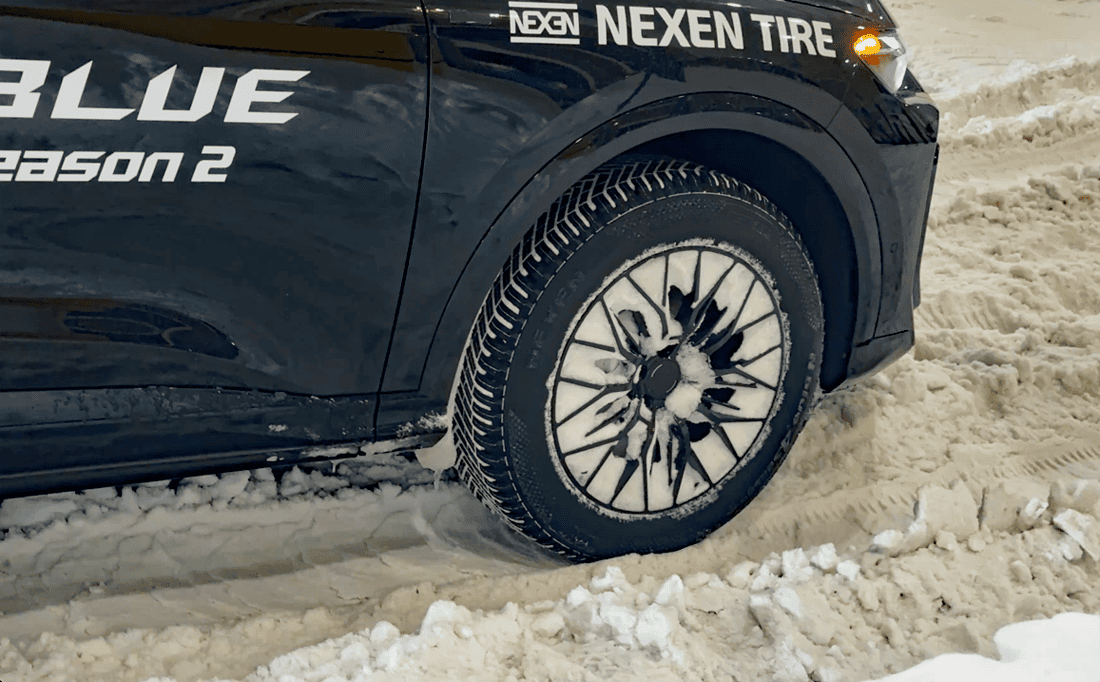
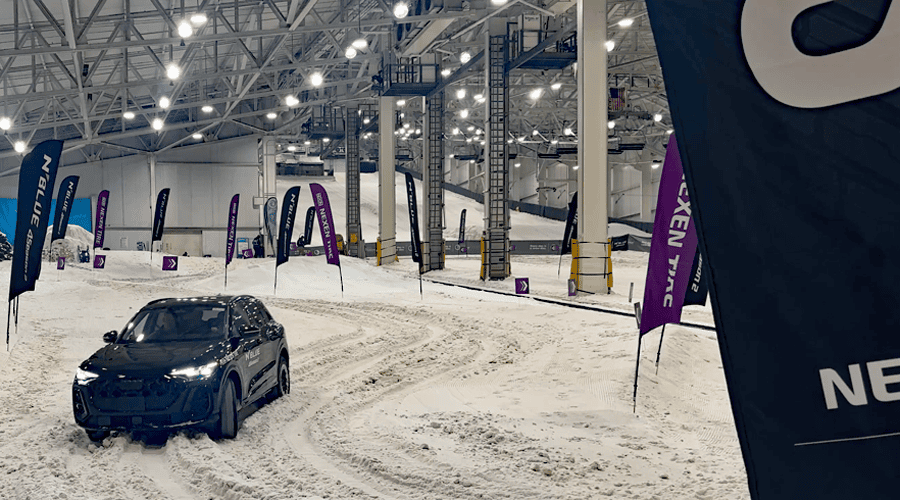
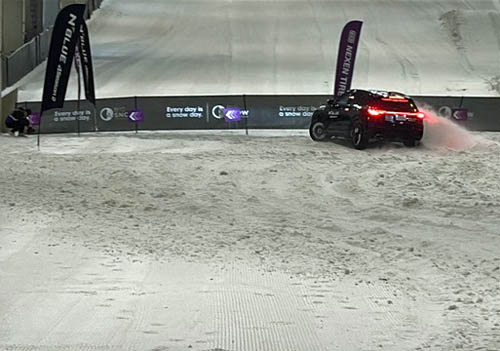
EAST RUTHERFORD, New Jersey – My breath puffed out in wisps as I stepped ankle deep in snow, walking toward the test area. I was just in time to see the two Audi Q5s take off on the short track through the snow. One vehicle was shod in Nexen N’Blue 4 Season 2 tires, and the other had Michelin CrossClimate 2 tires. The cars swooshed through the snow, flinging a shower of the white stuff in various directions with each turn.
Can Nexen tires compete with Michelin?
It was 28 degrees, and we were at an indoor snow facility, the only one of its kind in the U.S., doing a brief comparison test of the Nexen and Michelin all-season tires. First in snow, then outside on streets in 60-degree weather.
Though my time with Nexen was brief, it was enough to give us a good idea that the biggest difference between these competitive tires is probably the price.
Who is Nexen?

While most people have heard of Michelin and have probably seen its “Stay Puft” Michelin Man mascot somewhere, a lot of people have never heard of Nexen. So, here’s a quick primer.
Nexen is the first and oldest tire company in Korea, founded in 1942, with its global headquarters being located in Yangsan, South Korea. After a few name changes, the Nexen name was officially adopted in 2000, building off the words “next” and “century.” The tire company established a U.S. operation in 2005, and while its tires were initially mostly replacement tires, they’ve started partnering with major automakers with Nexen tires being original equipment.
One of the newest vehicles you’ll seen Nexen tires on: the Jeep Recon. Automakers in the U.S. currently using Nexen tires include Hyundai, Kia, Volkswagen, Mitsubishi, Porsche, and Stellantis.
What is the Nexen N’Blue 4 Season 2 tire?
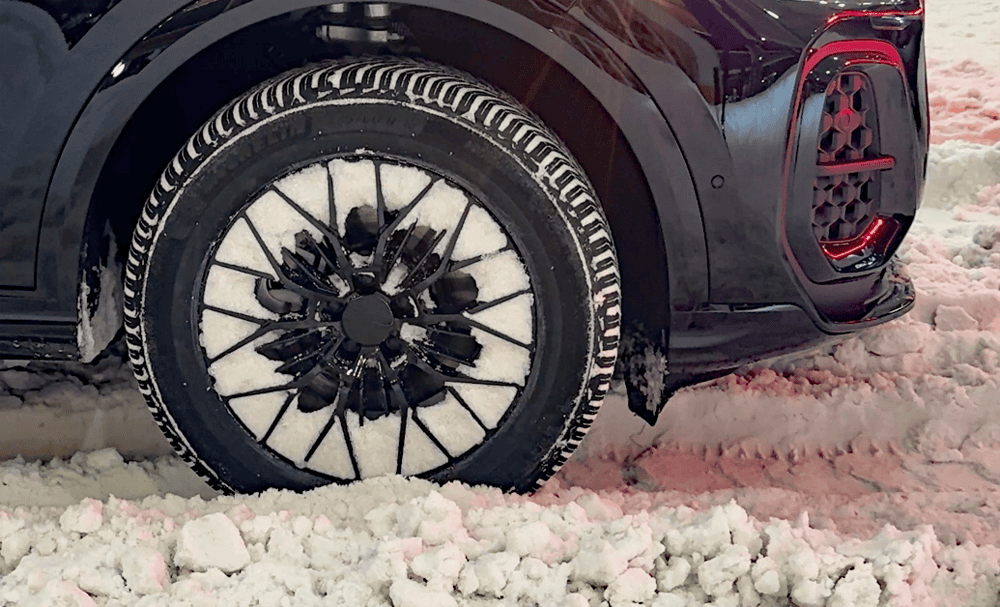
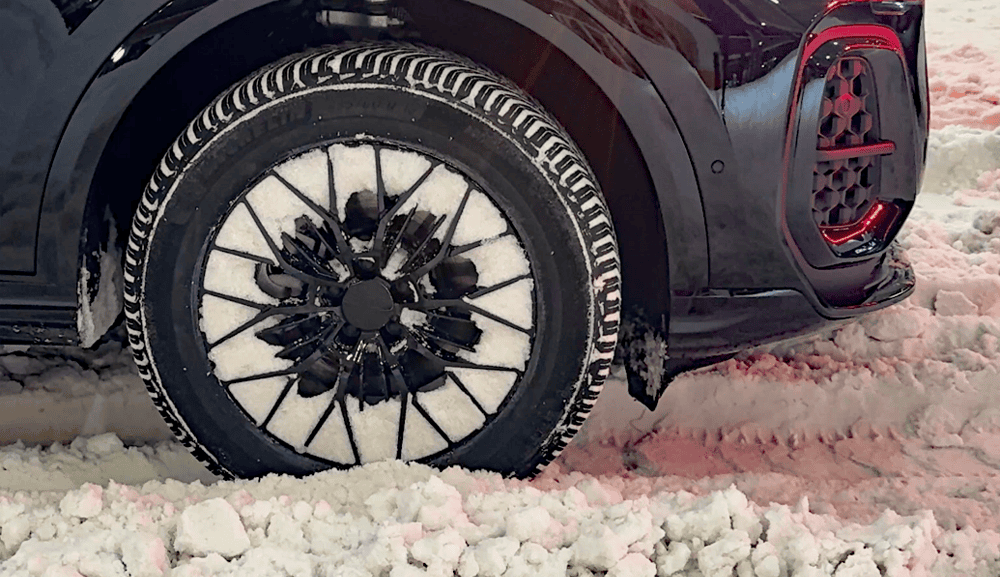
The N’Blue 4 Season 2 tire is an all-weather tire, and that means it performs well across the changing seasons and temperatures. While this is not a dedicated winter tire, it does carry a Three-Peak Mountain Snowflake (3PMSF) designation, so it has been tested for severe snow conditions and met a defined threshold.
The keys to this tire will be the jagged patterns on the tread, the micro-thin sipes that expel rain and snow, and Nexen’s proprietary all-weather compound with five times the resin. Nexen states that all this together improves snow traction by 20 percent, and improves handling in winter conditions by up to 15 percent when compared to its N’Priz AH8 all-season tire.
It’s also worth noting, these N’Blue 4 Season 2 tires come in 60 sizes, from 15 to 21 inches, and they carry a 70,000-mile treadwear warranty. The only other competitive tire that carries a similar warranty is the Bridgestone WeatherPeak. Most other tires carry a 60,000-mile warranty, and that includes the Michelin CrossClimate 2 tires we used as comparison tires.
The test: Nexen vs. Michelin
To be clear, we did not do extensive testing on either tire. We had the opportunity to drive both tires through a quarter-mile loop in the snow, uphill and downhill, with twists and turns. In some areas, the snow was up to 6 inches deep. And we did drive them back-to-back on similarly equipped Audi Q5 SUVs.
It was just a taste test, so to speak, but it was enough to see that the differences were minimal. The Michelin CrossClimate 2 tires probably carried a little more grip in the deep snow, but the Nexen N’Blue 4 Season 2 tires held their own. Neither car had me careening out of control, and neither got stuck in the deeper snow.
When we moved outside, we toddled through a parking garage before exiting to surface streets in 60-degree temperatures. We were still in Audi Q5s, and we were again able to test the tires back-to-back. Both sets of tires were quiet, but we didn’t get up over 45 mph. The Nexen tires felt a little stickier on the slick ramps of the garage. But overall, the differences were remarkably unremarkable.
The biggest difference: Cost
For an apples-to-apples price comparison, we looked at 215/60R16 tires from both Nexen and Michelin. And at the time of this writing, there is a $65 price difference for a single tire. That means you’ll pay $260 less for a set of Nexens vs. Michelins. And the price difference will increase as the tire size increases.
While Michelin certainly has a more established reputation, we will point out two things. First, Nexen said these N’Blue 4 Season 2 tires went on sale in Europe in 2022 and have continually shown less wear over time than competitors. Second, Nexen has never recalled a U.S.-market tire.
CG Says:
If you live in a cold-weather climate that stays below 45 degrees most of the winter, you can’t beat dedicated winter tires. But if you live in the Midwest where the weather waffles between 60 degrees and -14 degrees and you don’t want to go through the trouble of changing out your tires, an all-weather tire like the Nexen N’Blue 4 Season 2 is a great option.
In our brief test, we thought they were very competitive with the pricier Michelin CrossClimate 2 tires. But here’s the thing, you don’t have to take our word for it. In addition to the 70,000-mile warranty, Nexen offers a 60-day/1,000-mile trial. And if you don’t like the tires, you can return them to the original dealer with proof of purchase. The caveat: You won’t get your money back, but you can exchange them for another set of Nexen tires.
However, we don’t think that’ll be necessary.
Listen to the Car Stuff Podcast
Nexen Tire Pictures
Click below for enlarged images