
Physics buffs likely remember Newton’s Third Law of Motion, which reads, “For every action, there is an equal and opposite reaction.”
And while Newton’s Third Law enjoys universal acceptance as fact, you might be asking yourself how it applies to automotive marketing and advertising. I will explain…
Cadillac Seville Opera Coupe
All-New Seville
Cadillac introduced the Seville for 1975. The new sedan was smaller, cleaner looking, and sportier than anything else in the Caddy lineup. Advertising touted the new-think car as “European,” this given its tidy dimensions and high-tech features which included fuel injection—rare in the mid-Seventies.
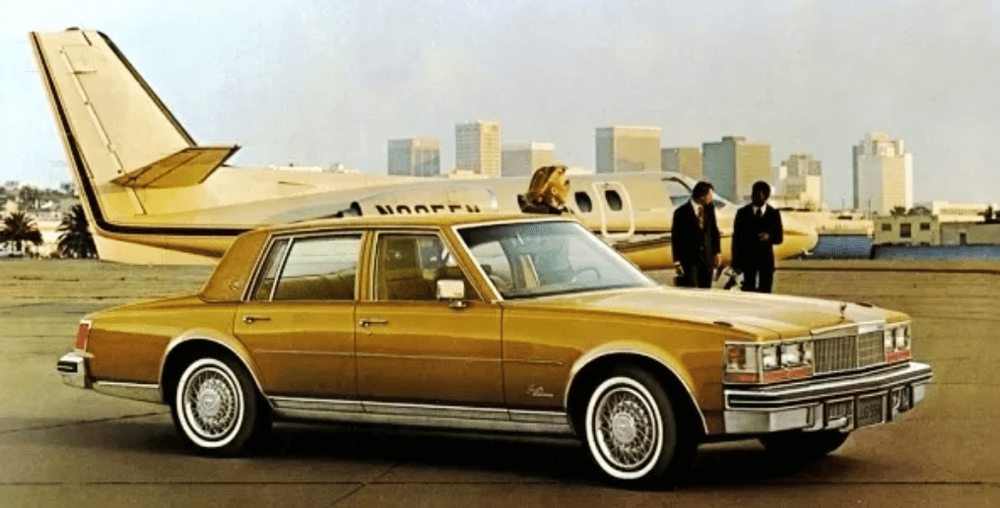
And for Cadillac buyers, the Seville’s showroom impact was profound. The new smaller Caddy, which was priced above other brand models, was more than two feet shorter than the popular Sedan DeVille, and weighed almost 1200 pounds less than the old-school model.
But if you thought that Cadillac was making progress updating and modernizing its vehicle portfolio, you’d be wrong, as Newton’s Third Law of Motion kicked in with a vengeance.
Grandeur Motorcar Corporation
It’s possible the all-new Seville design looked so clean and elegant, that it appeared to some as a blank canvas. Something almost unfinished. And while there was little most folks could or would do about the new Caddy’s relatively minimalist look, there was a company in Florida that saw the Seville as a block of clay just waiting to be molded…and gilded, and heavily ornamented. That company was the Grandeur Motorcar Corporation of Pompano Beach, Florida.
Seville Opera Coupe
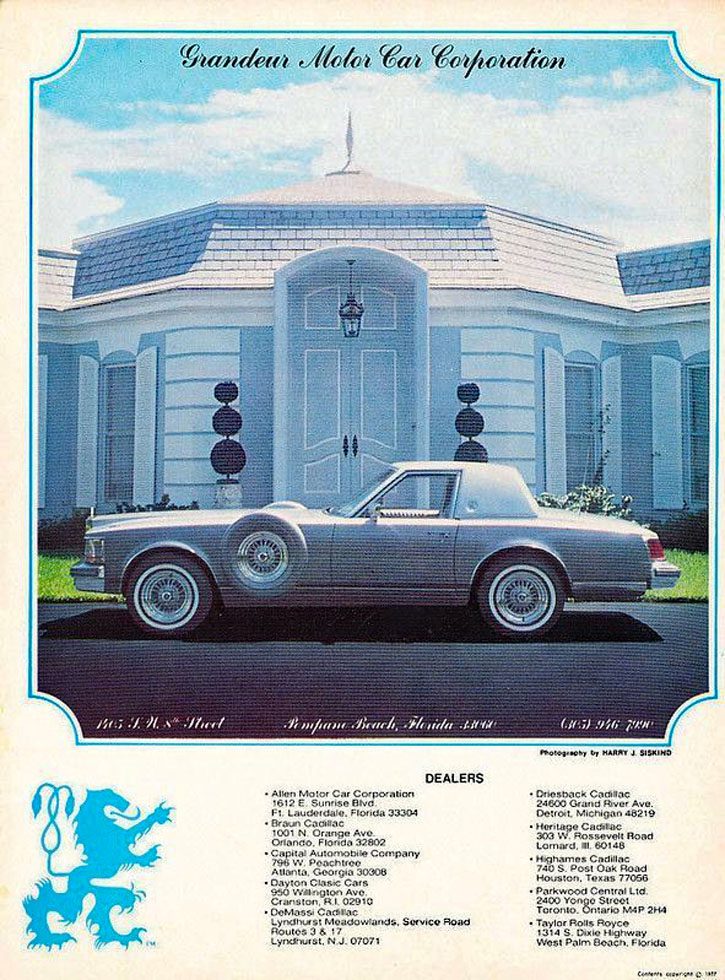
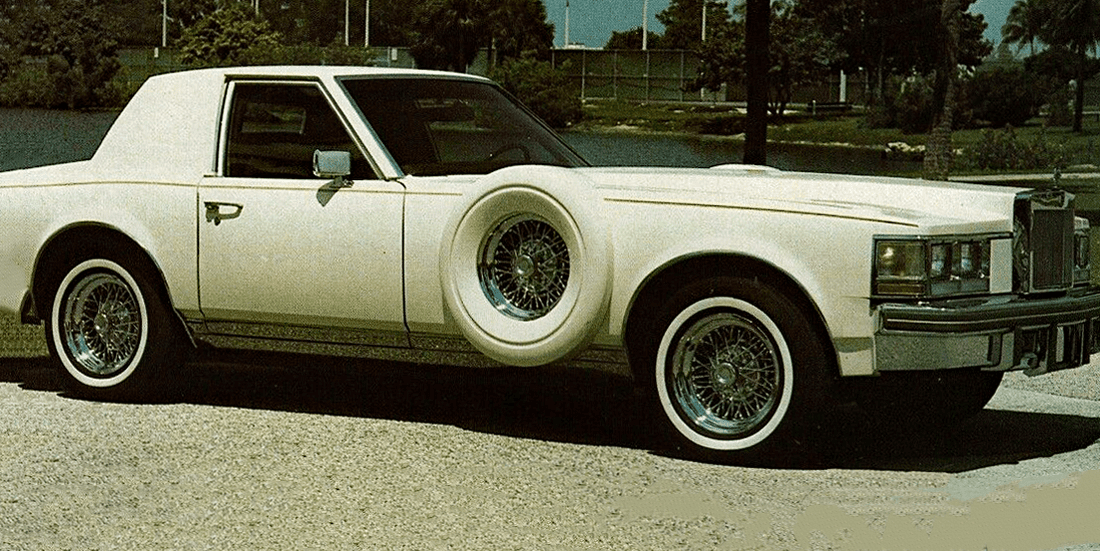
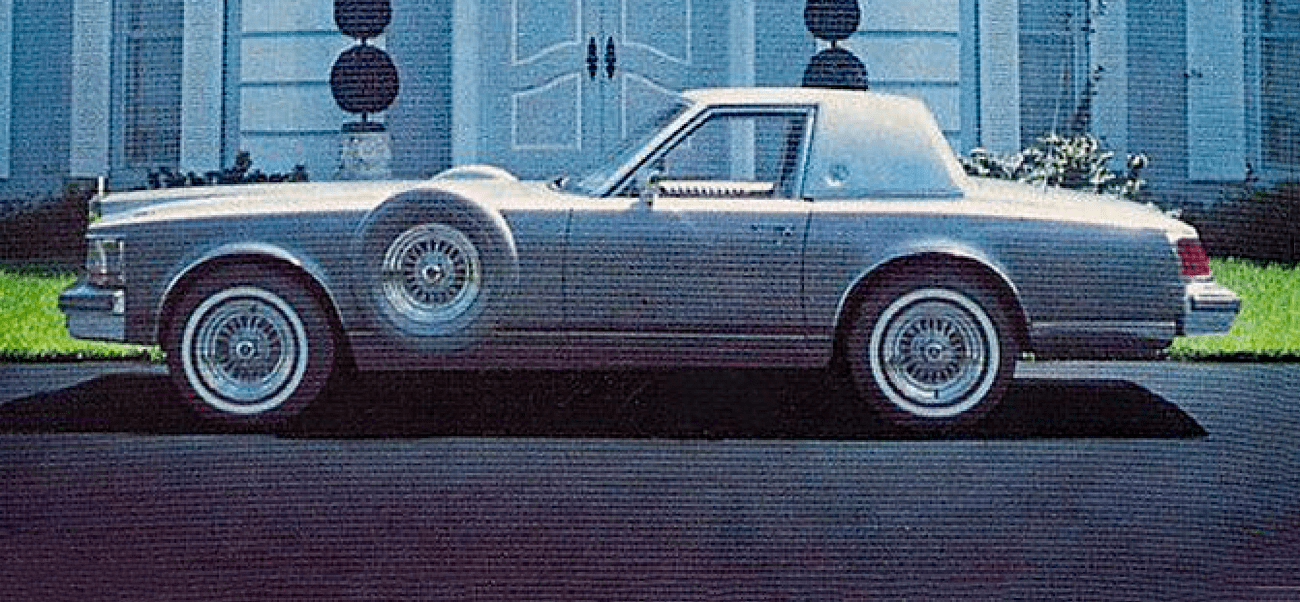
The Grandeur Motorcar Corporation was seemingly founded to produce one vehicle: The Cadillac Seville Opera Coupe. For an ungodly sum of money, the Grandeur team would do things to Caddy’s new premium ride that likely made factory designers and engineers cringe. Here’s a list of the modifications required to turn a Seville into a Seville Opera Coupe as pictured in the ad below:
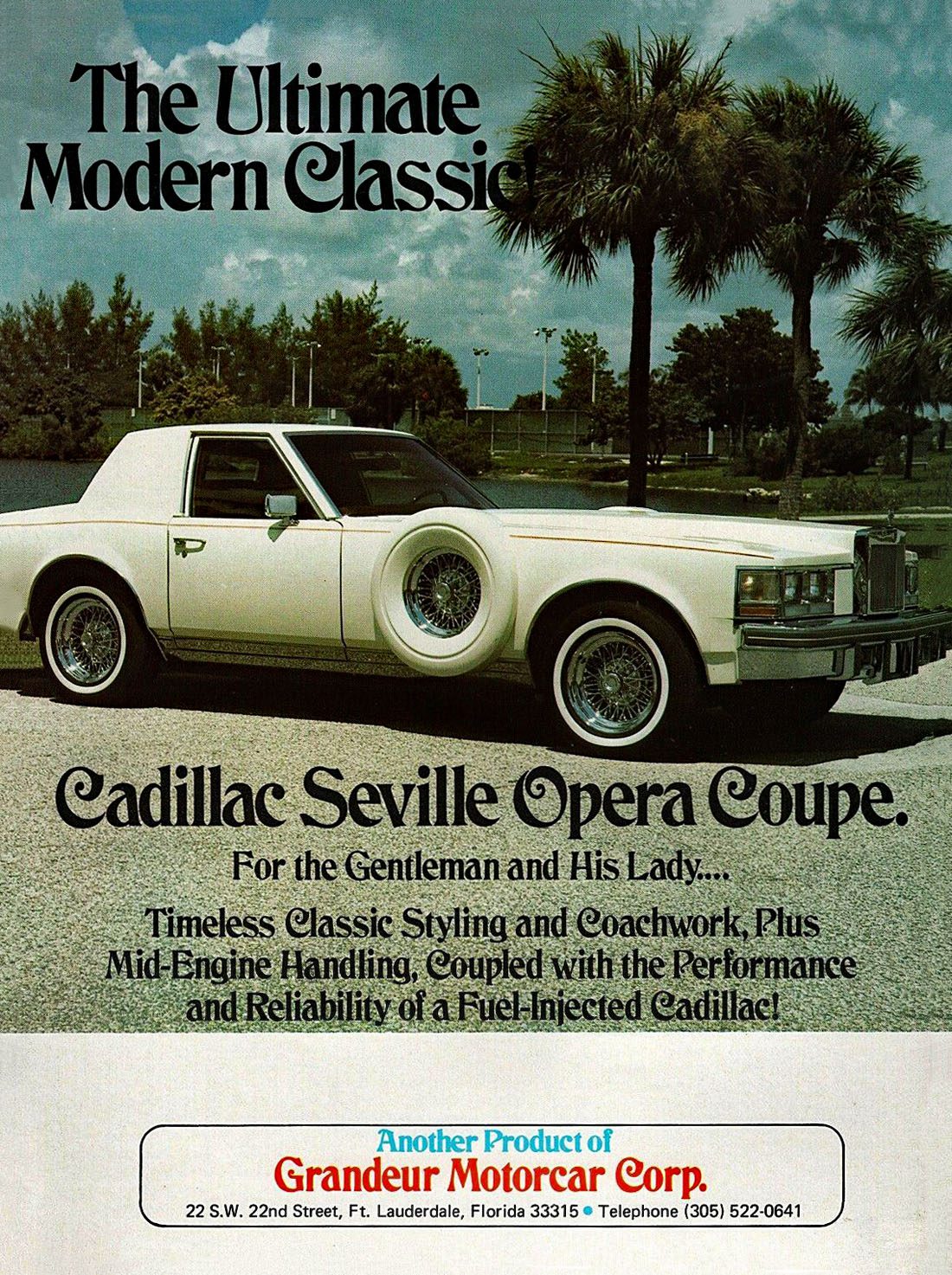
- Shorten body
- Shortened by 18 inches, rear seat and rear doors removed
- Elongated hood
- Engine and firewall pushed rearward on frame, creating longer hood, greater distance from doors to front axle, seriously messing with proportions (The ad claims the Opera Coupe sports “mid-engine handling.” We have our doubts.)
- Fake side-mounted spare tire covers
- Because…classic?
- Chromey grille modifications
- Claimed to be Rolls-Royce-like
- Star Wire 30-spoke wheels
- Like them or not, they were pricey
Prices
First offered on 1978 examples, the Opera Coupe conversion added roughly $6500 to the price of a customer’s Seville. That’s about $32,000 in 2026 dollars to ruin a perfectly good Cadillac Seville.
Production
There are no solid production figures to be had, but most estimates put the total number of Opera Coupes built between 1978 and 1979 at 600—a figure that, frankly, frightens this author.
Lincoln Versailles
Grandeur also built a few similar conversions of Lincoln’s compact Versailles, a car with a mission and market position similar to that of the Seville. Also, there are pictures of a few conversions of next-generation “Bustleback” Sevilles (1980-1985), which are painful to look at. We can’t confirm that any were actually sold to the public.
Power and Performance
Unable to find a review of the Opera Coupe, we can only assume that it’s on-road performance was reasonably Seville-like, despite the ill-considered modifications. That said, the doors, shortened as part of the conversion, look very small for a luxury vehicle. Husky car collectors, take note.
Collector Value
The Seville Opera Coupe is not especially rare today, showing up occasionally at auctions, and commanding what we believe are scandalous prices, given the generally upsetting appearance of the truncated Caddies.
Recent private-party sales of good-condition Opera Coupes put the value the of the converted Caddys between $15,000 and $25,000, which seem nuts to us.
Newton’s Third Law of Motion
But, back to Newton. Our point is this: As Cadillac moved to update and modernize its lineup, an equal force, from Florida, pushed back against the effort, turning select Sevilles into baroque caricatures of what most people remember as classic cars.
If Newton were here to assess the situation, one wonders if he would appreciate the gravity of the matter.
Listen to the Car Stuff Podcast
Cadillac Seville Opera Coupe Pictures