
 Text by Tom Appel
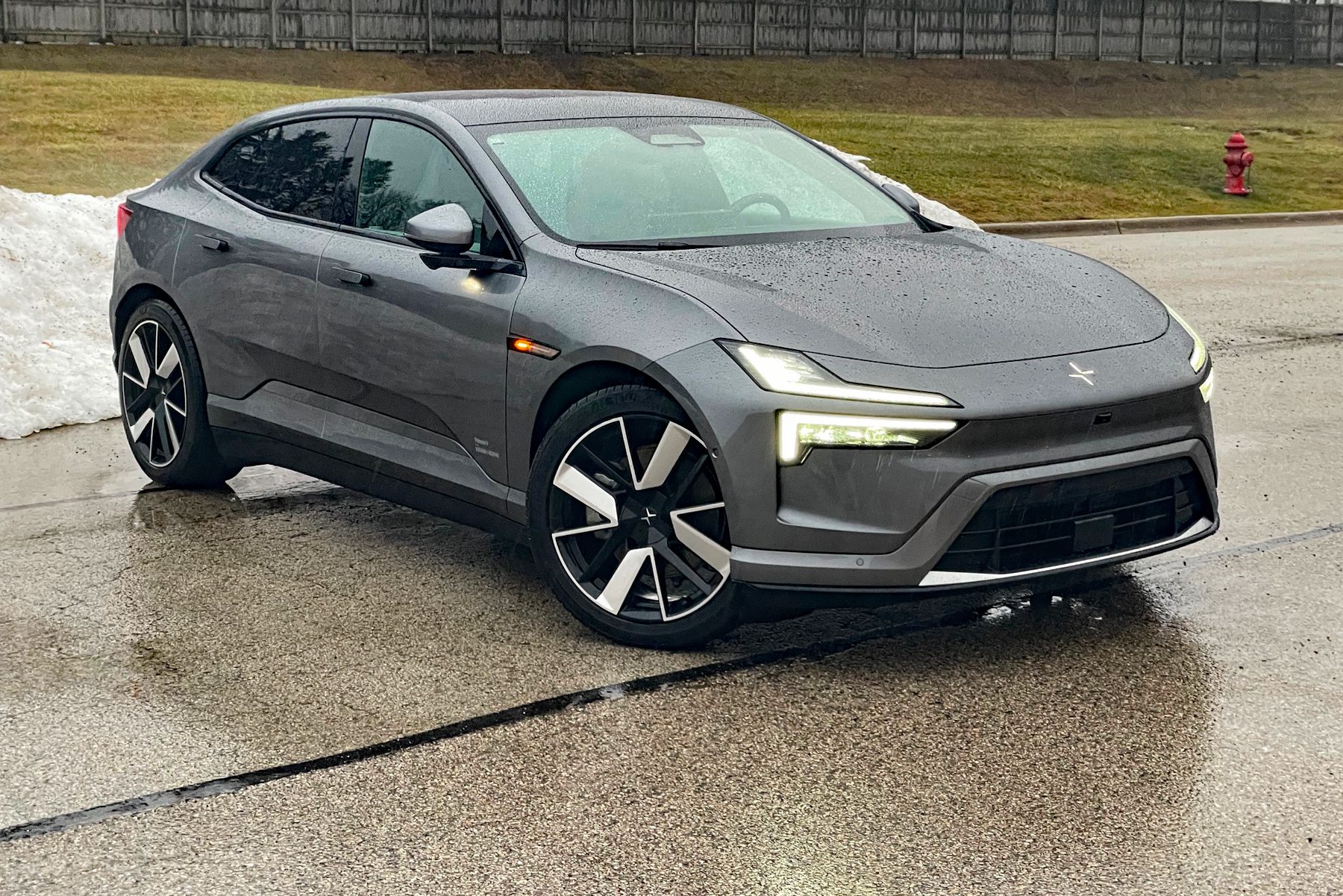
2026 Polestar 4 Dual Motor
Specs
Class: Premium Compact Crossover
Country of Manufacture: South Korea
Color: Stratus
Miles driven: 178
| CG Report Card | |
|---|---|
| Room and Comfort | A |
| Power and Performance | A |
| Fit and Finish | A- |
| Fuel Economy | A |
| Value | A- |
| Report-card grades are derived from a consensus of test-driver evaluations. All grades are versus other vehicles in the same class. Value grade is for specific trim level evaluated, and may not reflect Consumer Guide's impressions of the entire model lineup. | |
| Big & Tall Comfort | |
| Big Guy | A |
| Tall Guy | A |
| Big & Tall comfort ratings are for front seats only. "Big" rating based on male tester weighing approximately 350 pounds, "Tall" rating based on 6'6"-tall male tester. | |
| Drivetrain | |
| Engine Specs | 544-horsepower |
| Engine Type | Motors |
| Transmission | Automatic |
| Drive Wheels | AWD |
Battery capacity: 100 kWh
EPA-estimate MPGe: 85
Manufacturer-estimated driving range: 280
Maximum Charge Rate: 200 kW
Consumer Guide range estimate (ideal conditions): 300+ miles
Charge Port Location: Rear driver-side fender
Charging Standard: CCS
Frunk Capacity: .5 cubic feet
Base price: $62,900 (not including $1400 destination charge)
Options on test vehicle: Body Painted Lower Mouldings ($1000), Electrochromatic Glass Roof ($1500), 21-inch alloy wheels ($1800), Nappa Leather ($3700), Plus Package ($5500), special paint ($1300)
Price as tested: $79,100
Snow Performance
Poor Fair Good Very-Good Excellent
Audio-System Brand
Audio-System Quality
Poor Fair Good Very-Good Excellent
Pros and Cons
The great: Modern take on luxury and performance, fun to drive
The good: Good range, comfortable and roomy cabin, outstanding audio system
The not so good: Expensive leather option not worth the money
Review
The Polestar lineup is frustratingly named in number by the order of a model’s appearance. This means there is nothing meaningful to be gleaned from a Polestar’s single-digit model name but its order in the maker’s family album. Thus…
Polestar Lineup
- The 1 was a plug-in hybrid sports coupe (and the only non-EV Polestar)
- The 2 was a compact 4-door hatchback
- The 3 is a midsize crossover
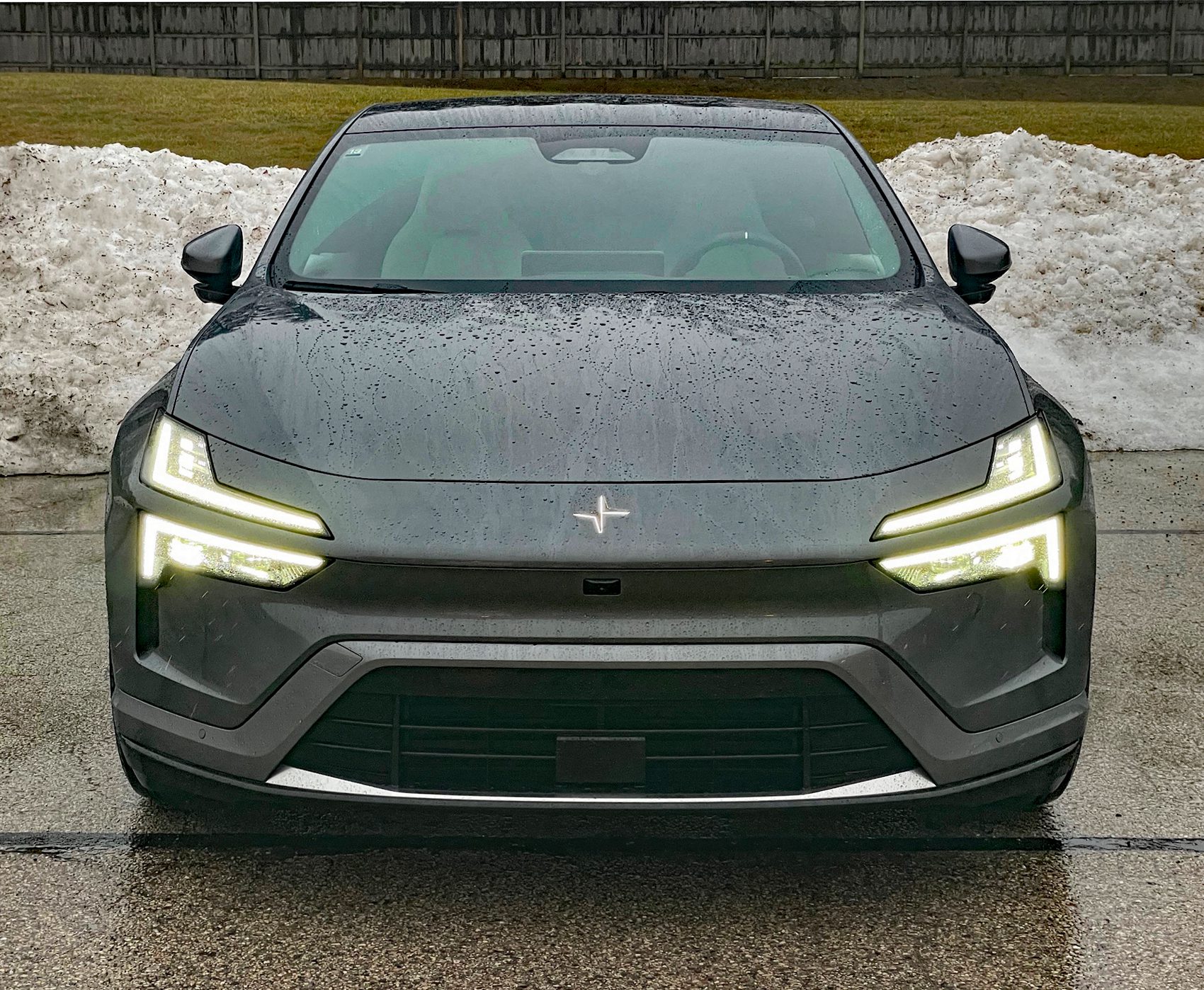
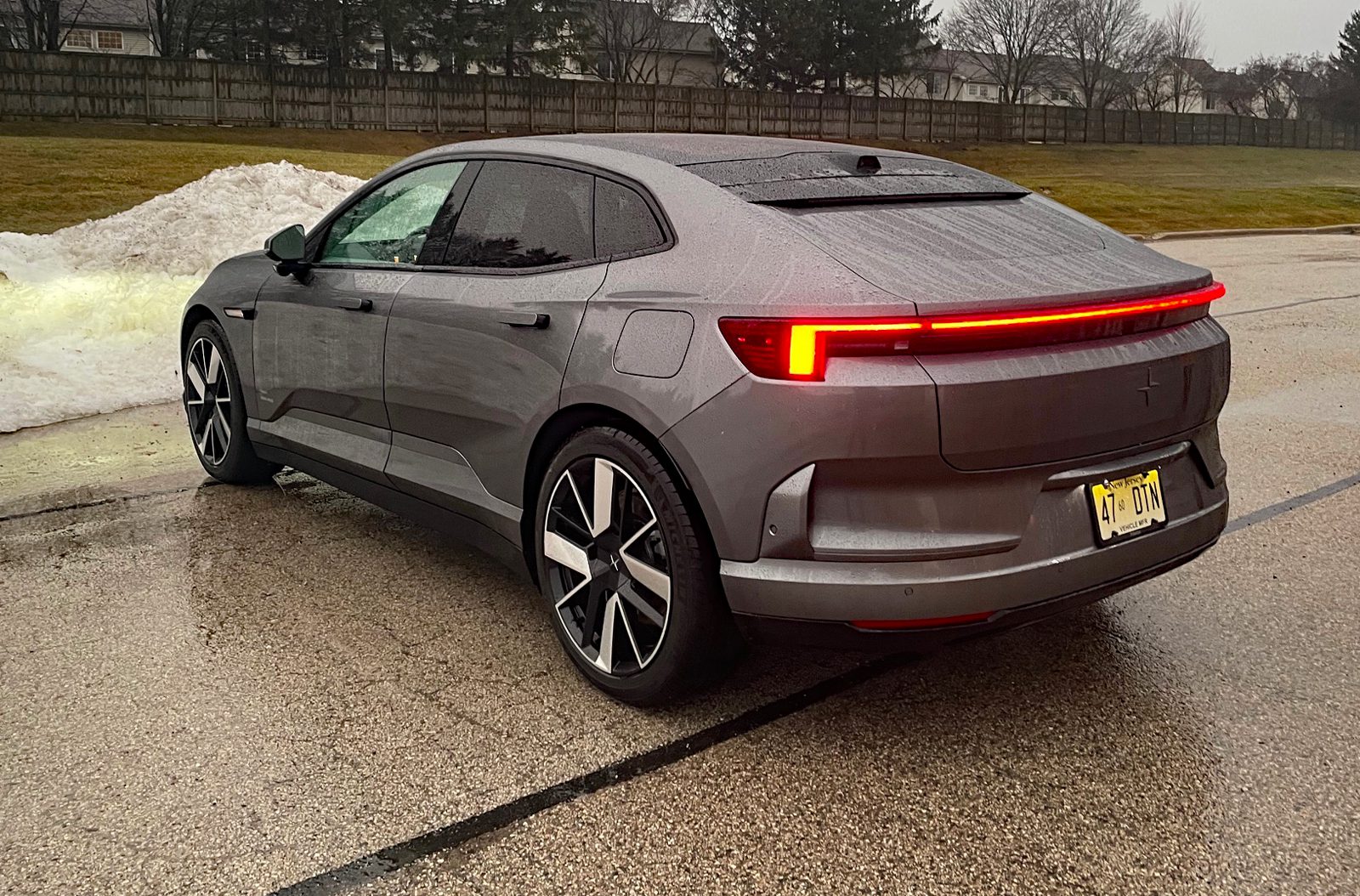
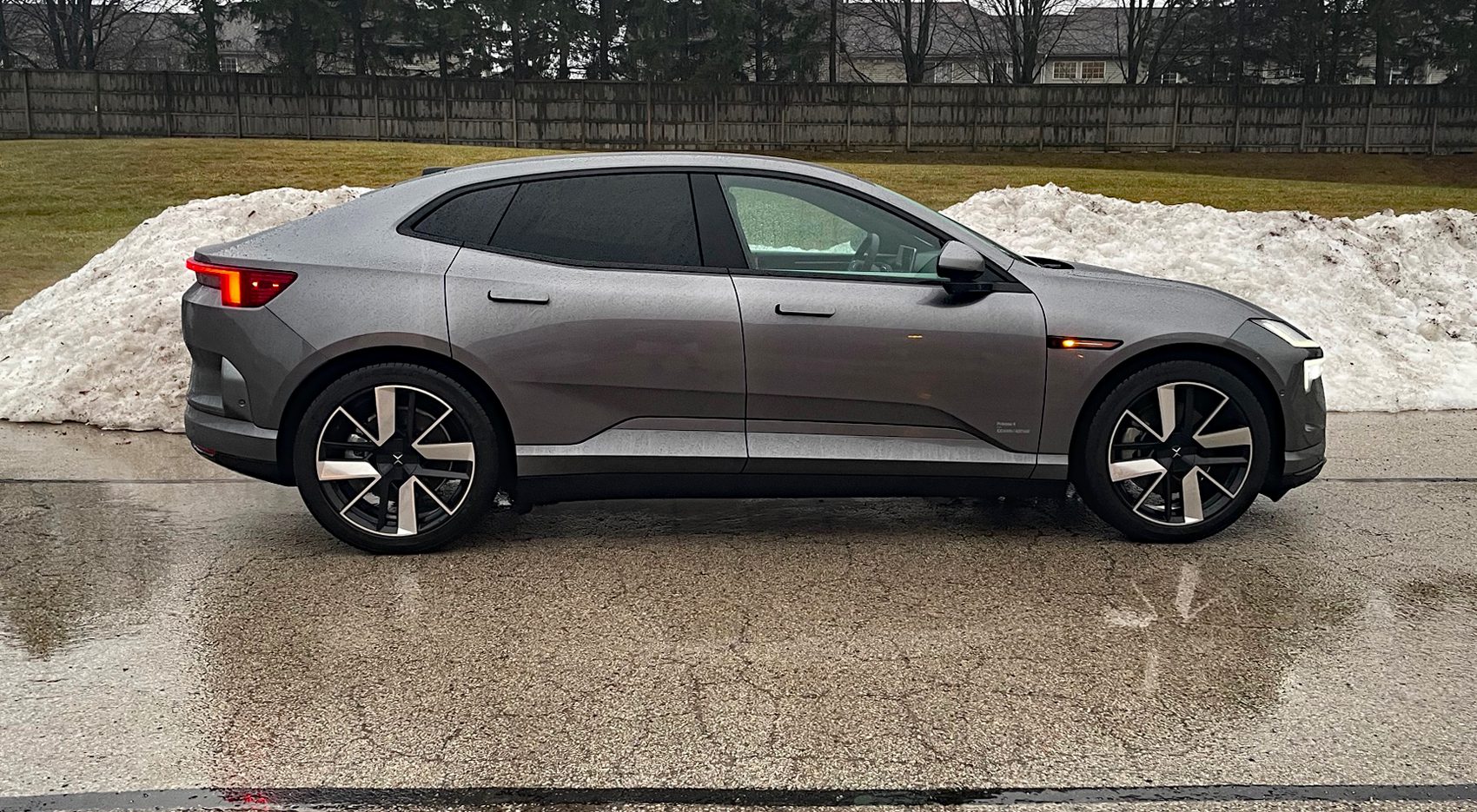
- The 4 (seen here) is a rakish compact crossover
- The 5 will be a premium large sedan
- The 6 will be a convertible sports car
If you were paying attention, you took note of the was/is/will-be interplay on the list above. Though Polestar has been in the U.S. for nine years, and though only 19 U.S. states can claim a dealership, the maker has already shed two models—and has plans for two more.
Nation of Origin
But more confusing than Polestar’s naming convention is its nation of origin.
Though a spinoff of Swedish carmaker Volvo, and though maintaining headquarters in Torslanda, Sweden, Polestar isn’t really all that Swedish. Here’s the story:
Go back far enough, and Polestar was a Volvo performance sub-brand—something akin to AMG at Mercedes-Benz. Borrowing the Polestar moniker for a new, premium, electric-car brand seemed like a good idea, as any association with Volvo likely added to the new carmaker’s credibility.
Polestar is Chinese
But is Polestar really Swedish? Arguably, no. Volvo has been a wholly owned subsidiary of Chinese parent company Geely since 2010, when it was purchase from Ford. Geely owns such well-known brands as Lotus, Smart, and Zeekr.
Polestar 4 is Chinese
Though the corporate chain of ownership is confusing, with subsidiary Volvo owning a piece of the company, Polestar is ostensibly entirely owned by Geely, and its products comprised of both Volvo and home-grown Geely technology. The Polestar 4 is, in fact, mostly Chinese—in the best possible way.
The Polestar 4 was originally to be built in China, but U.S. tariffs on Chinese-built EVs forced a manufacturing venue change to South Korea, making the “4” a truly international vehicle.
For 2026, the Polestar 4 is offered in three trim levels, ranging in price from under $60,000 to almost $75,000. The lineup:
- Single Motor ($57,800)
- Dual Motor ($64,300)
- Dual Motor Performance ($74,300)
Battery Capacity and Range
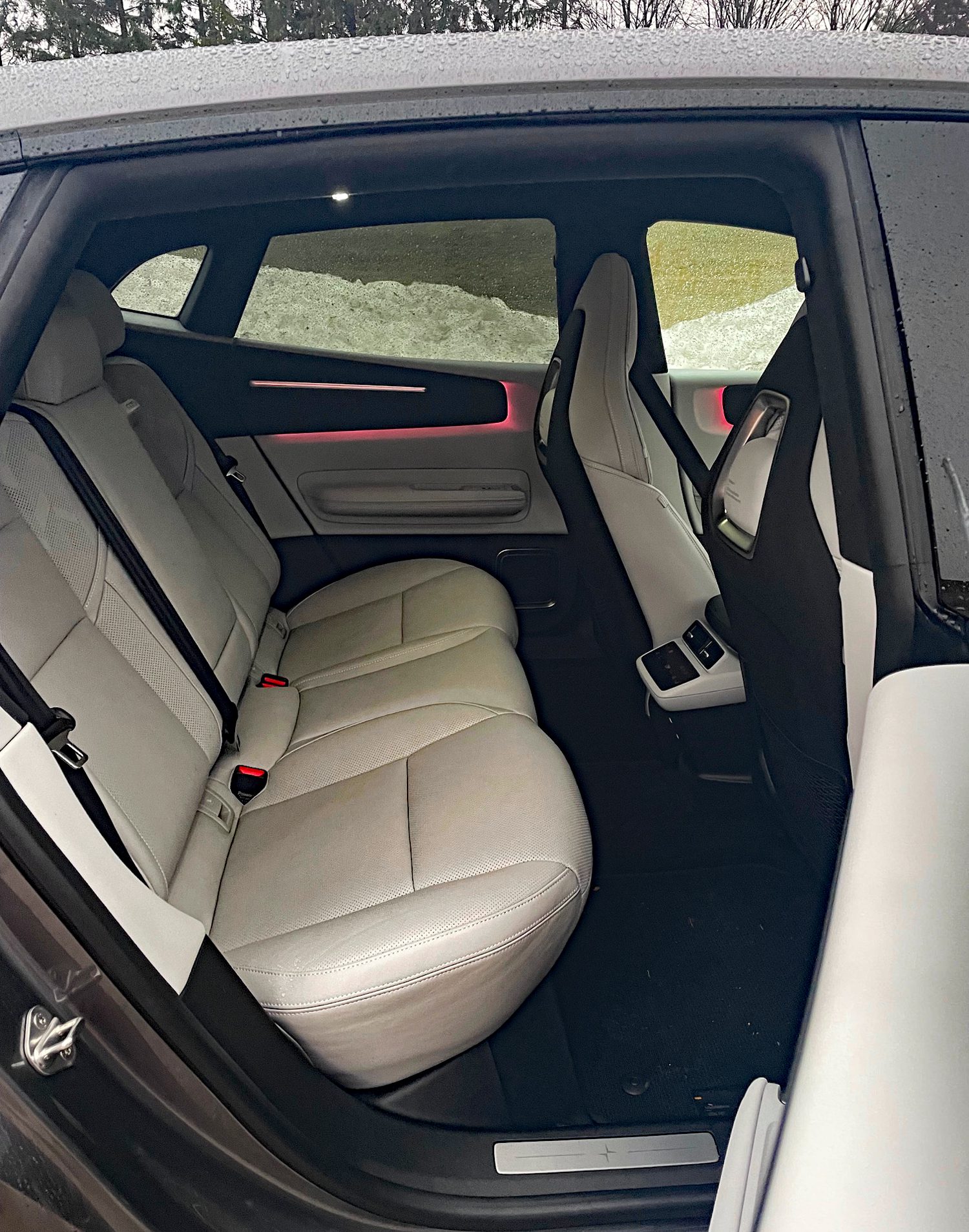
All Polestar 4 models feature a 94-kWh battery. Single-motor models are rear drive, and rated at 268 horsepower, and 310 miles of range. Dual Motor and Dual Motor Performance examples boast a healthy 544 horsepower and either 280 (Dual Motor) or 255 miles (Dual Motor Performance) of range.
It’s worth noting that on other Polestar models, the Performance upgrade includes a bump in horsepower, which is not the case on the 4. Instead, the top trim-level Polestar 4 benefits from just larger performance-oriented wheels and tires, and sport-suspension tuning.
Test Car
Consumer Guide recently spent a week behind the wheel of a 2026 Polestar 4 in Dual Motor trim in Stratus (color) and equipped with the Nappa leather interior, and Plus Pack. All told, our test car came to $79,100, including destination charge.
No Rear Glass
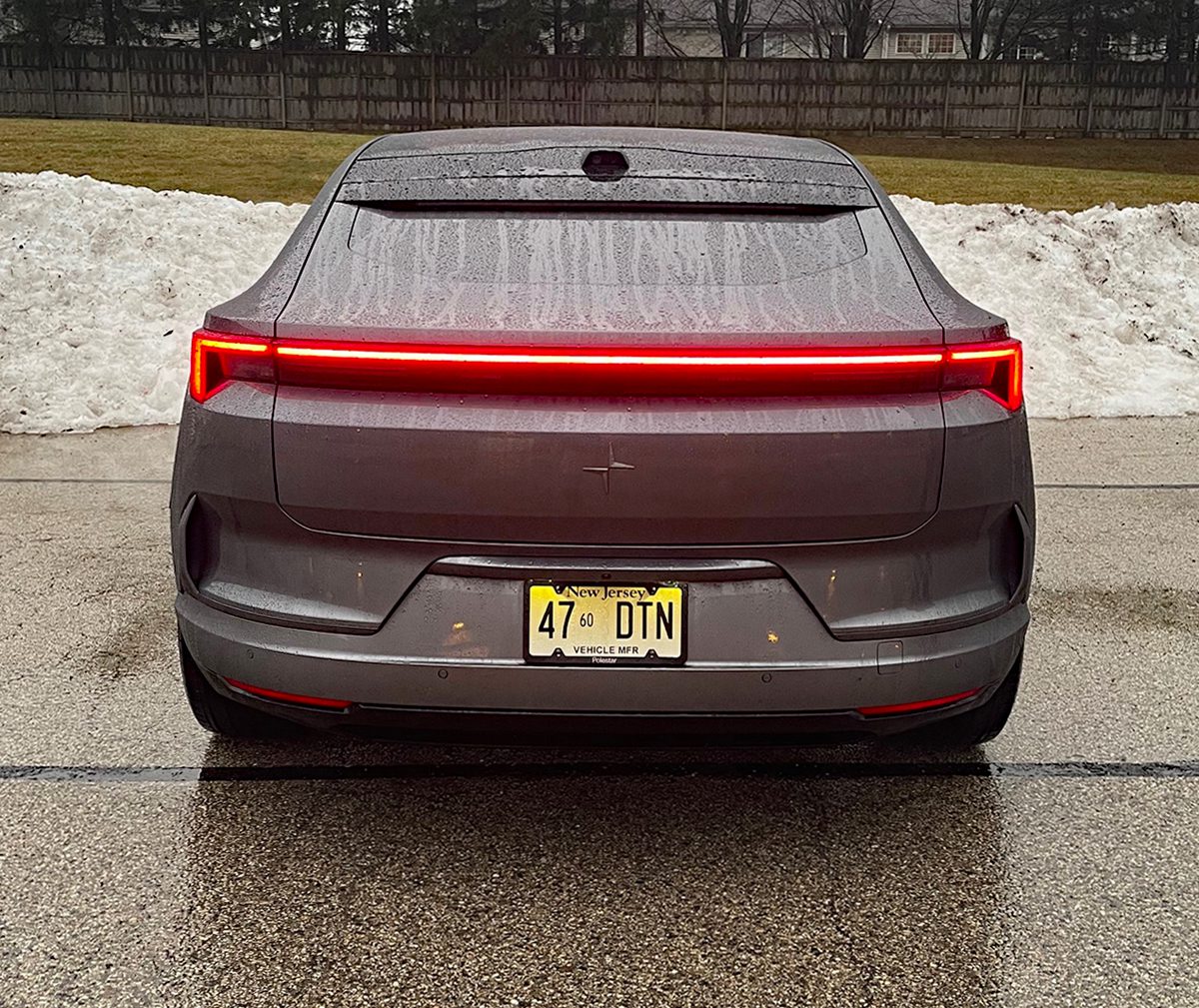
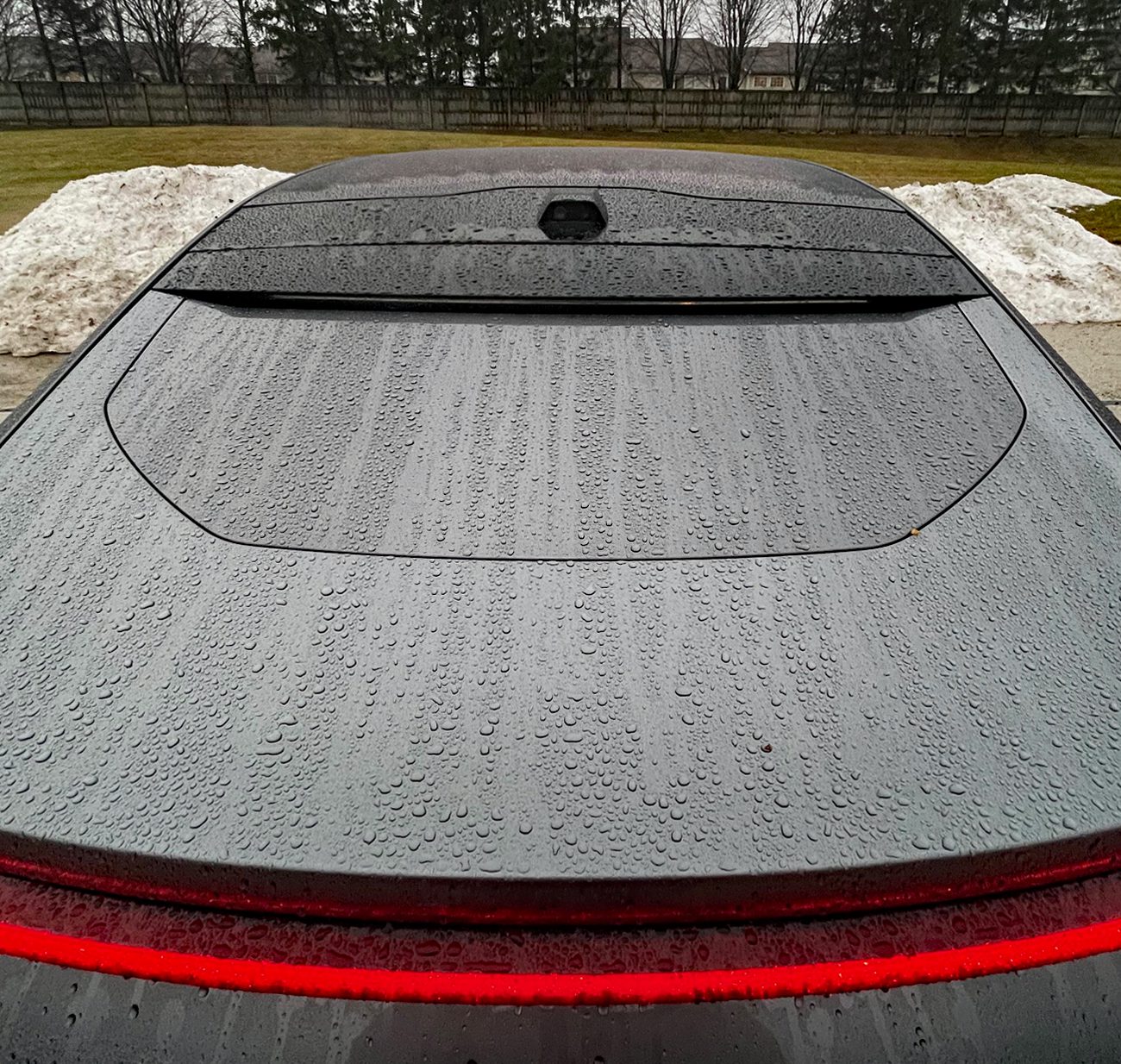
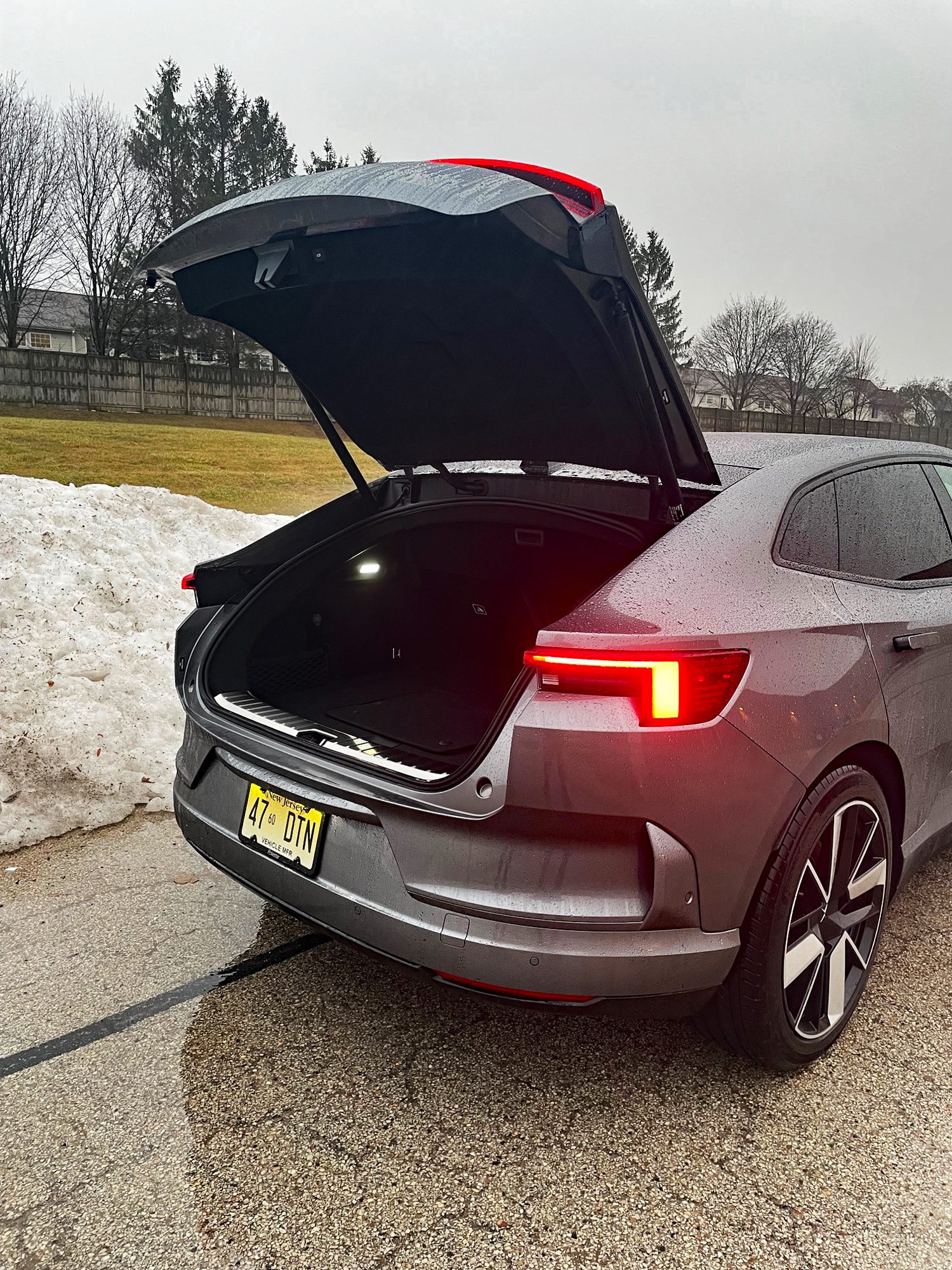
Let’s get the big news here out of the way: The Polestar 4 is not fitted with rear glass. And as shocking as this seems, the glassless aft view of the Polestar 4 is especially sleek and uncomplicated. To compensate, a rear view image is projected onto the inside mirror—which we suppose is no longer actually a mirror. The image is bright, clear, and enhanced during dark hours. The system works well, though we found ourselves hesitating to change lanes to the right, something we assume we would get used to after more time in the 4. Trusting the mirror alone is something of a leap of faith, this despite the fact that the mirror does offer a usefully wide-angle view of the traffic behind.
Cabin and Controls
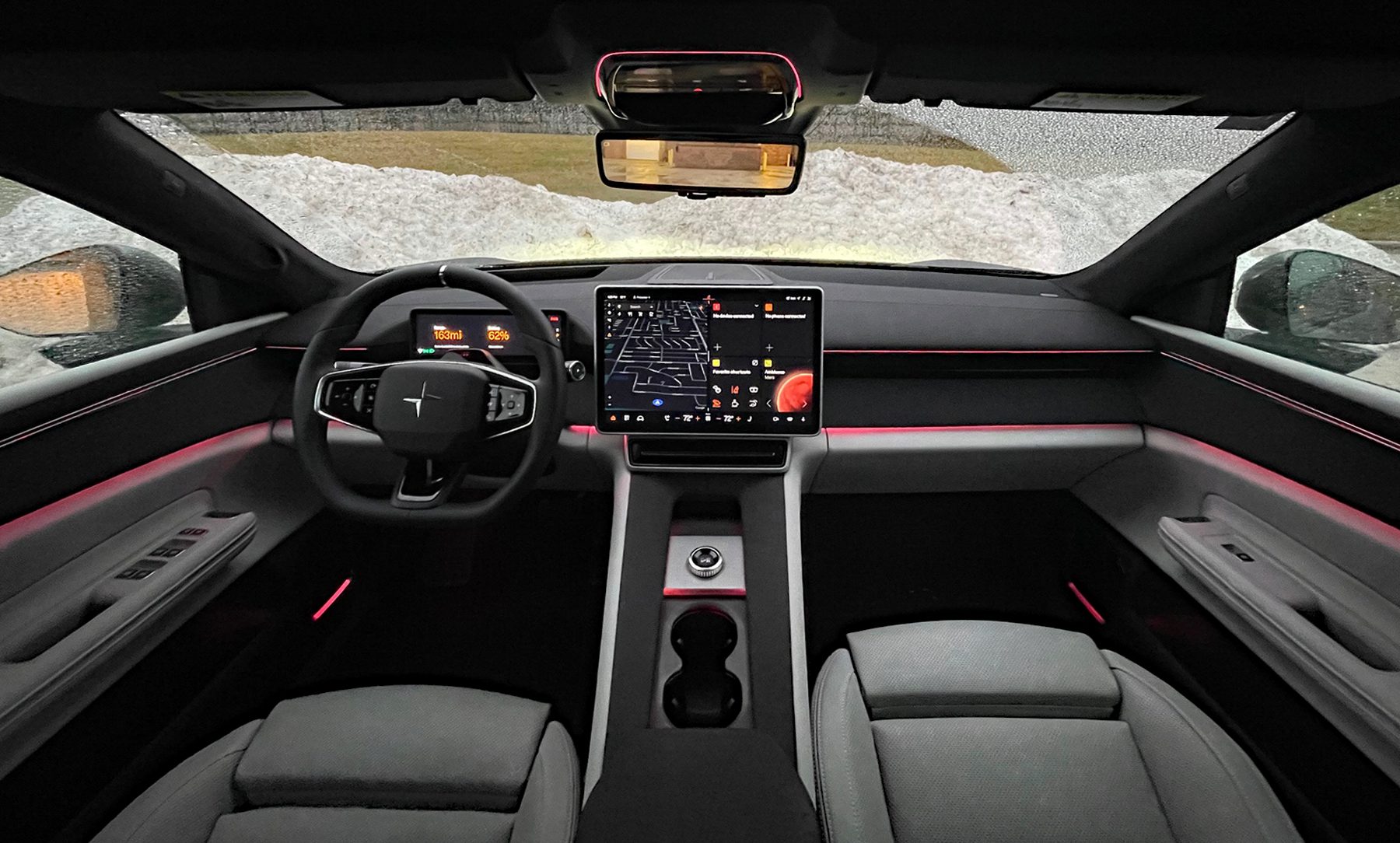
The Polestar 4 cabin is bright, airy, and surprisingly roomy. We’re not sure the optional $3700 leather package presents well enough for the price, but there’s no denying the 4’s premium-car bona fides. And, assembly quality is top notch.
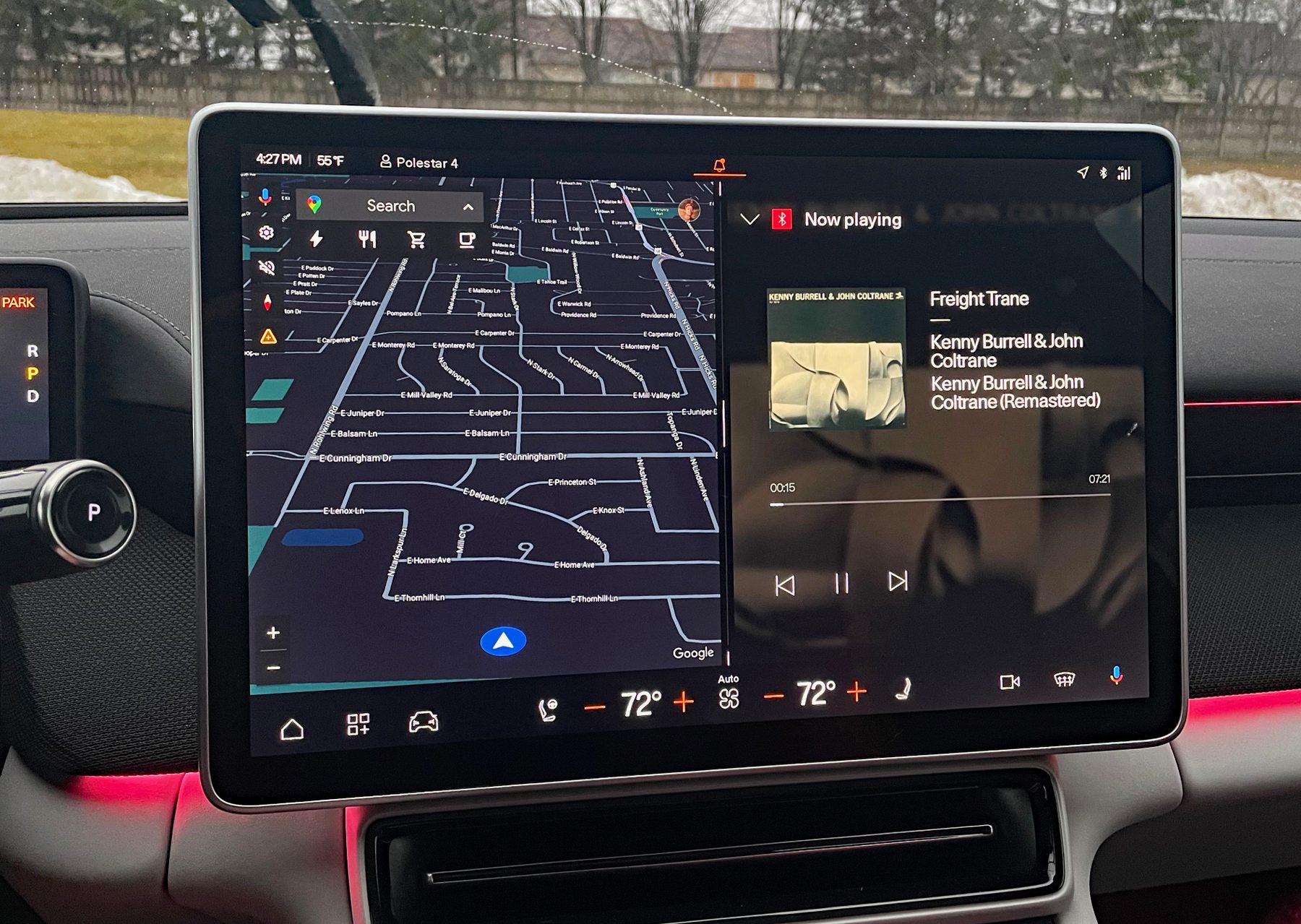
Like most premium EVs, the Polestar 4’s controls are mostly confined to the central touchscreen, though quick access to most functions comes by way of well-organized icons found along the side and bottom of the screen. That said, adjusting the outside mirrors via the center screen—or steering-wheel controls—is needlessly complicated.
Room and Comfort
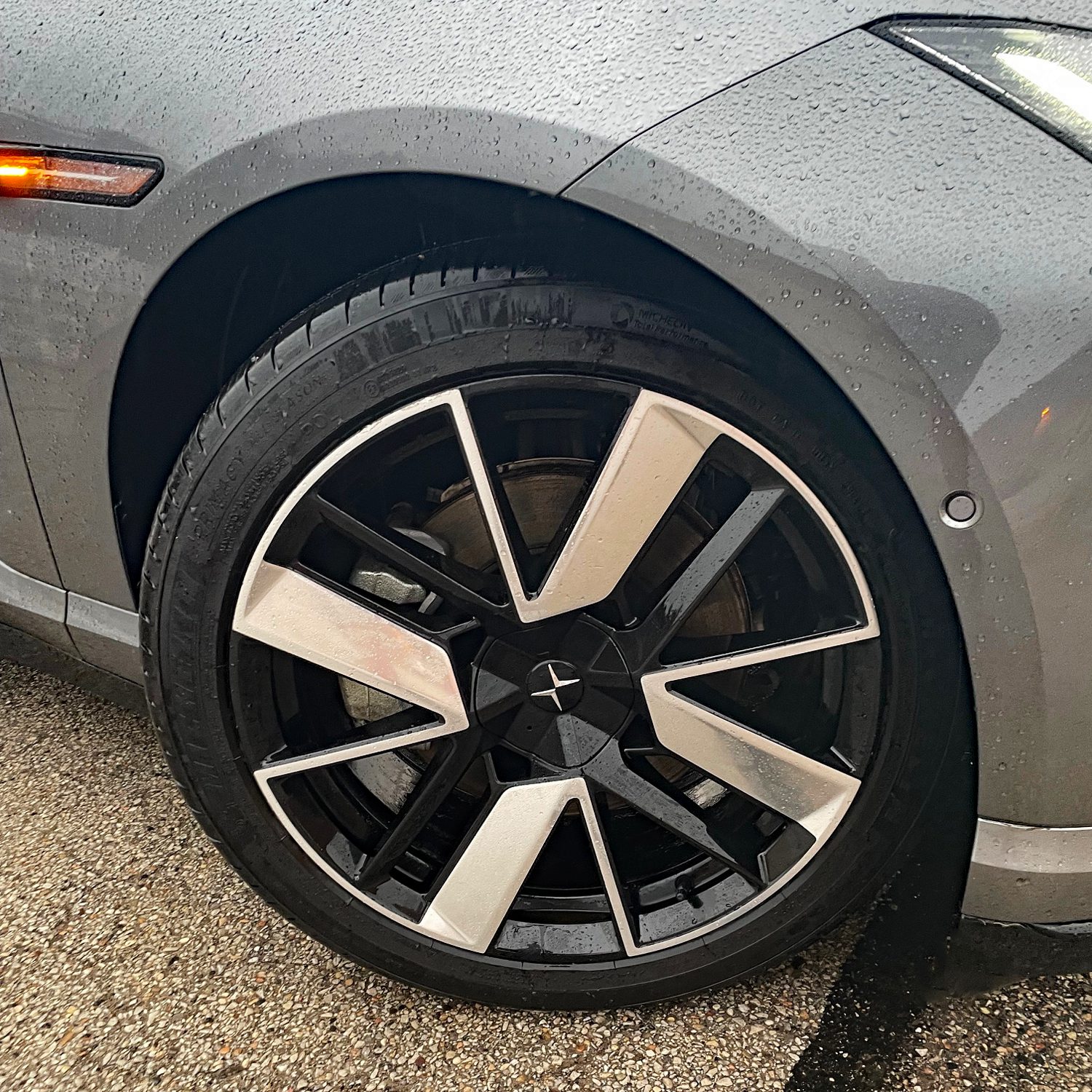
Though it sits lower than many small crossovers, the 4 offers plenty of adult space in both the front and rear seating rows. Access is made easy by wide opening doors and generous portholes. And though the view rearward is obscured by, well, the lack of a window, outward visibility forward and to the side is excellent.
Ride and Handling
Underway, the Polestar crossover is, frankly, a dream to drive. Ride and handling are top notch, and though the steering is a little light, it feels solid and reassuring. Likewise, the 4 hustles around corners and cloverleaf on-ramps with sprightly confidence. Not only is there plenty of power on tap, but impressive grip as well. The Polestar 4 made us wish that our weekly drive routes included time on curvy mountain roads, or the Autobahn.
Range
In what amounted to mild winter weather, our test car turned in range performance at least in keeping with EPA estimates, and would likely exceed those numbers by a good margin during warmer months.
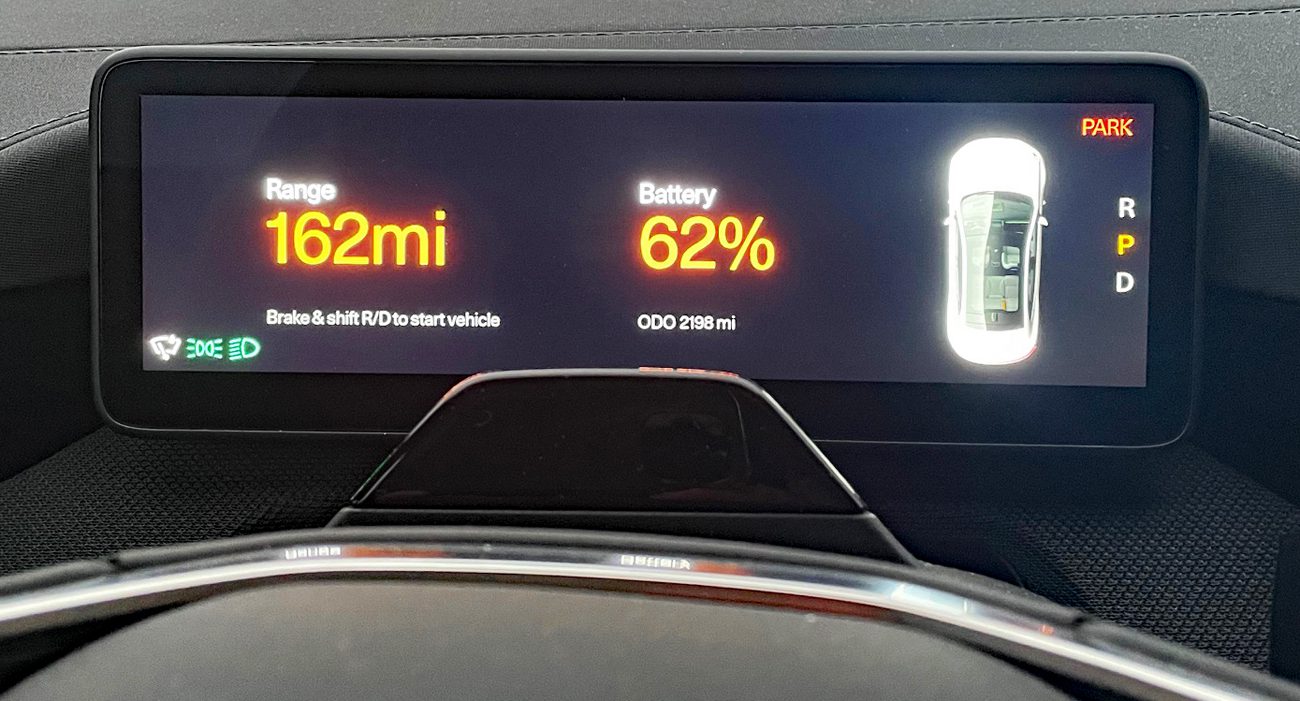
We did, however, endure a slow charging session, with peak a peak power-transfer rate of just 30kW. This is well below the Polestar 4’s rated 200 kW rate. As disappointing as this performance was, we cannot rule out a possible issue with the charger itself.
Zeeker 001
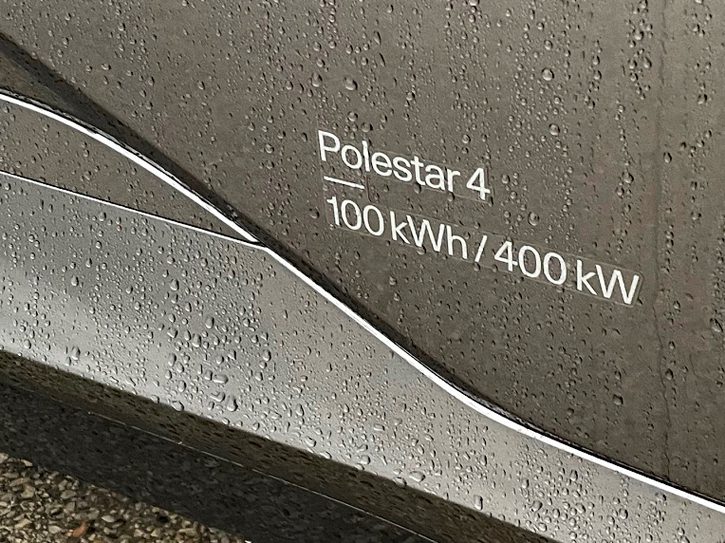
As for how Chinese the Polestar 4 is, we’re not sure it matters, but here’s the lowdown: Both the Polestar 4 and Zeekr 001 are built on Geely’s Sustainable Experience Architecture (SEA). The two vehicles are similar in size, and Chinese-market examples are built alongside each other in the same factory. While other Polestar products have relied heavily on Volvo technology, the Polestar 4 is the brand’s first home-grown model, and it is, frankly, spectacularly good.
Value
We really could not be more impressed by the Polestar 4. From its sleek and modern design, roomy cabin, sporty attitude, and top-notch cabin quietness and ride quality, this compact Polestar leaves a lasting—and overwhelmingly positive—impression. And, being selective with the options, you can put together a Polestar 4 that doesn’t cost all that much more than a loaded conventional luxury crossover.
If the Polestar 4 is a harbinger of Chinese electric vehicles to come, other carmakers need begin bracing for some very serious competition.
Listen to the Car Stuff Podcast
2026 Polestar 4 Pictures