
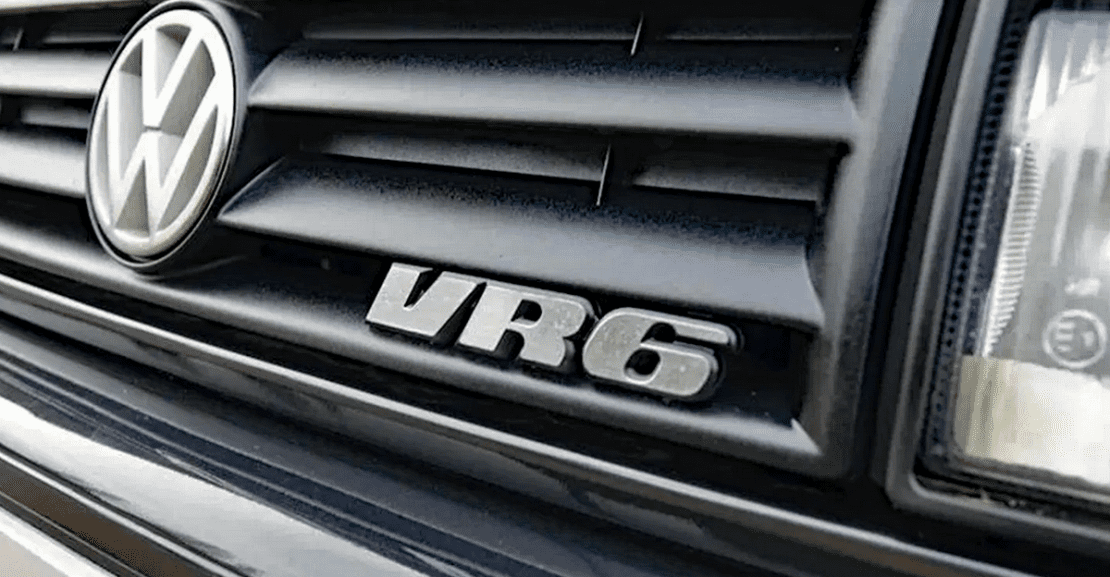

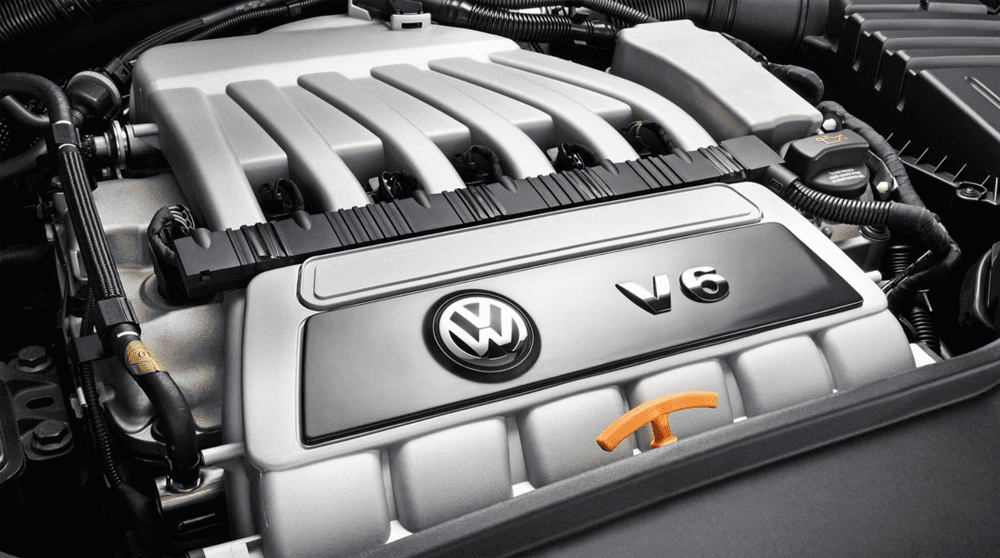
The VR6 was a unique 6-cylinder gasoline engine developed by Volkswagen and produced from 1991 through 2024.
What was the Volkswagen VR6 Engine?
VR6 Engine
The term VR6 comes from the German word “verkürzt” (shortened) and “neihenmotor” (inline engine). Counterintuitively, the VR6 did not employ an inline cylinder arrangement, but a very narrow-angle “V” setup, with just 10.5–15.0 degrees between cylinder banks. In contrast, a typical modern V6 engine is designed with 60 degrees between cylinder banks.
VR6 Advantages
Despite there being two cylinder banks, the VR6 made use of a single cylinder head, which saved cost, weight, and, and most importantly, space. The engine was designed specifically for transverse mounting in front-wheel-drive (or AWD) compact cars, where a conventional V6 wouldn’t fit. The VR6 would later be modified for other applications, however.
Compact Design
The VR6 was slightly longer than a typical inline-four, but much shorter and narrower than a standard V6, allowing VW to offer six-cylinder power in models like the Golf, Jetta, Passat, and performance-oriented Corrado without major updates under the hood.
VR6 Applications
The VR6 made its debut in the 1991 Volkswagen Passat sedan and wagon, and the sporty Corrado hatchback. The engine was initially offered in displacements of 2.8 and 2.9 liters. Early versions of the VR6 were rate at between 172 and 188 horsepower.
Later updates included a move to 4-valve cylinder heads and displacements as great as 3.6-liters. Horsepower would climb to as much as 295 horsepower.
Audi, Bentley, Porsche, and More…
Over time, the VR6 would appear under the hood of Volkswagen sister-brand vehicles, including the Audi A3 and TT, as well as the Porsche Cayenne.
VR5
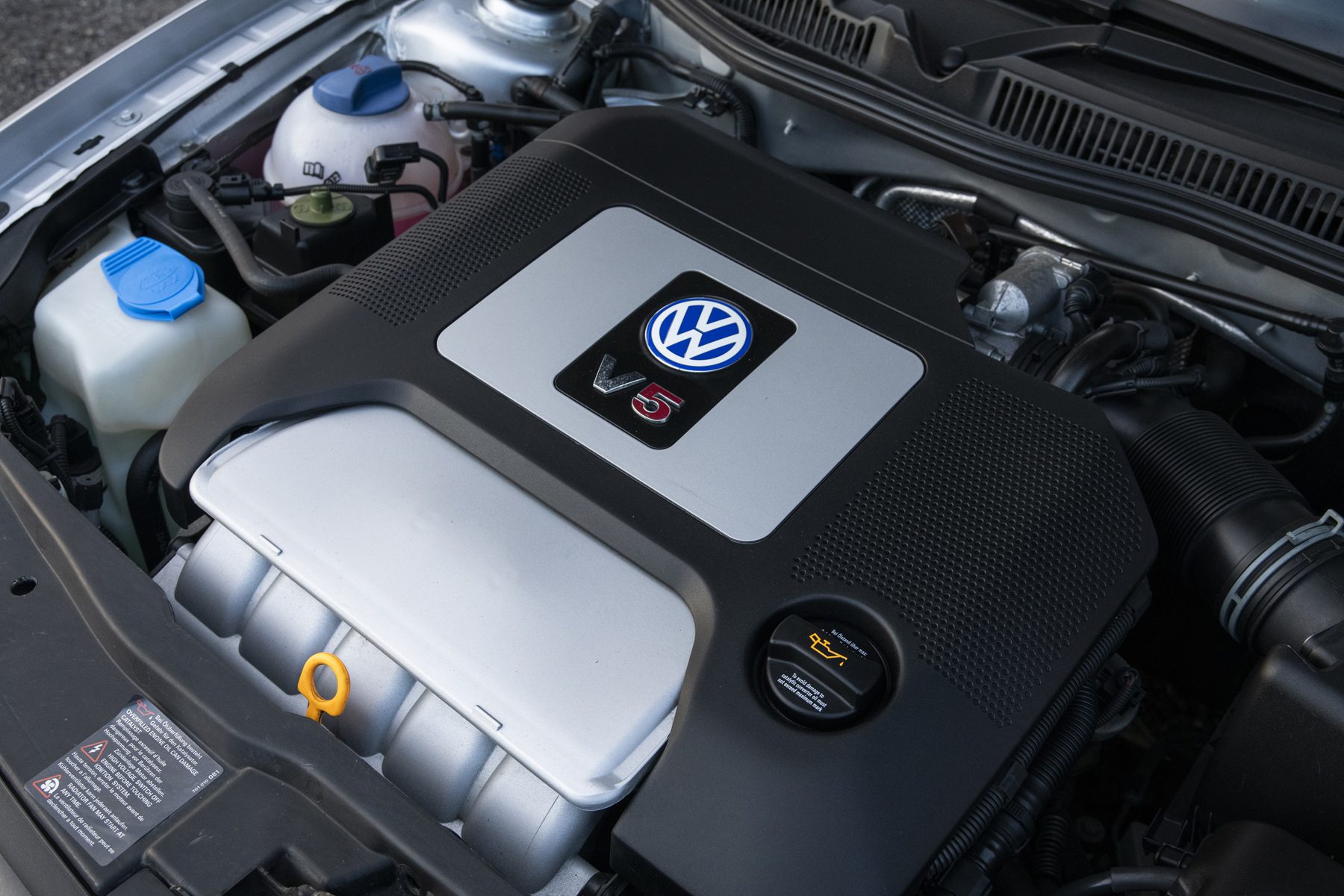
A 5-cylinder “VR5” engine based on the VR6 was also briefly produced, though it saw no U.S.-market applications.
Production
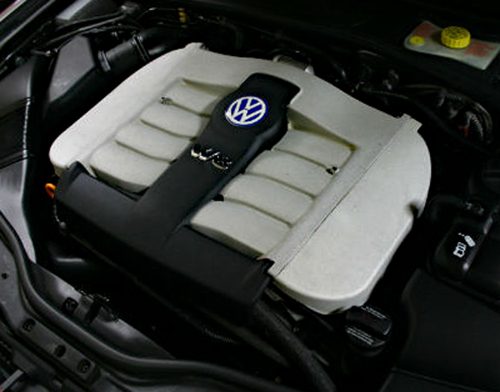
Production of the unique mill ended in December of 2024, after nearly 1.9 million examples were built. Despite its reputation for power and performance, the VR6 was replaced mostly by turbocharged 4-cylinder engines of between 1.8 and 2.0 liters in displacement.
Sporty Character
The VR6 earned the respect of car enthusiasts for its low-end torque and willingness to rev. It also sounded sporty, with a distinctive, throaty exhaust note that came in part as a result of its narrow-angle design. The VR6 became a cult favorite for its performance in vehicles such as the VW Golf R32.
VR6 Shortcomings
The engine had its drawbacks, however. The VR6 was thirstier than small turbocharged engines of similar power output, and as emissions and efficiency standards tightened, it became less viable.
Modular Engine Family
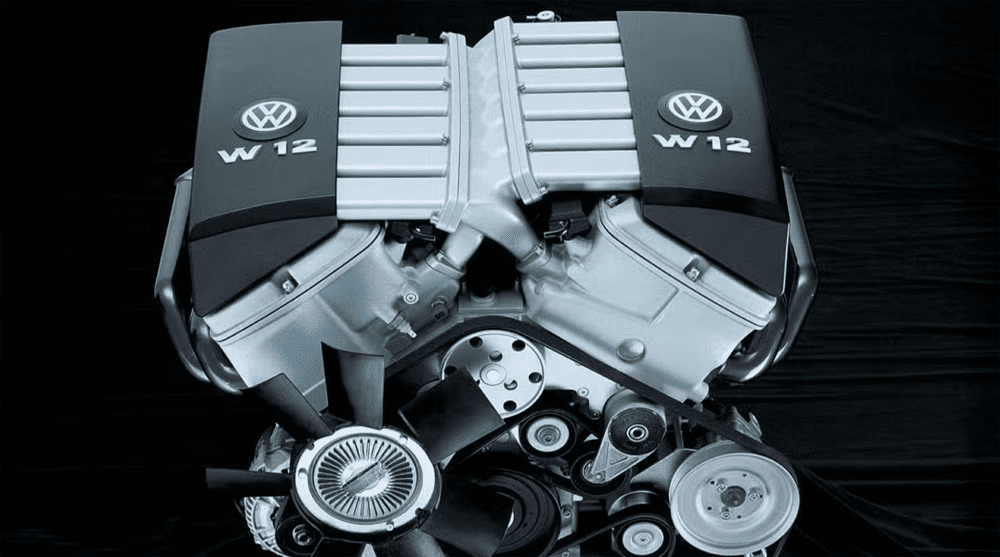
The VR6 engine family directly served as the foundational architecture for Volkswagen Group’s W8, W12 and W16 engines. Interestingly, the VR6’s narrow-angle made it compact enough to be “doubled up.” For high-power and premium-brand applications, Volkswagen joined VR6 engines on a common crankshaft at a wider angle (typically around 72°), creating a distinctive “W” configuration when viewed from the end. Variants included 8-, 12-, and even 16-cylinder engines that were, at their core VR6 powerplants.
W8
The W8 was comprise of two “VR4” blocks joined at the hip. The W8 was found in such cars as the VW Passat and Phaeton.
W12
Essentially two VR6 engines mated for a total displacement of 6.0-liters in most applications. The W12 was found in a wide range of vehicles including the VW Passat and Phaeton, as well as the Audi A8, the Bentley Continental GT and Flying Spur, and others. It delivered smooth performance in a relatively compact package.
W16
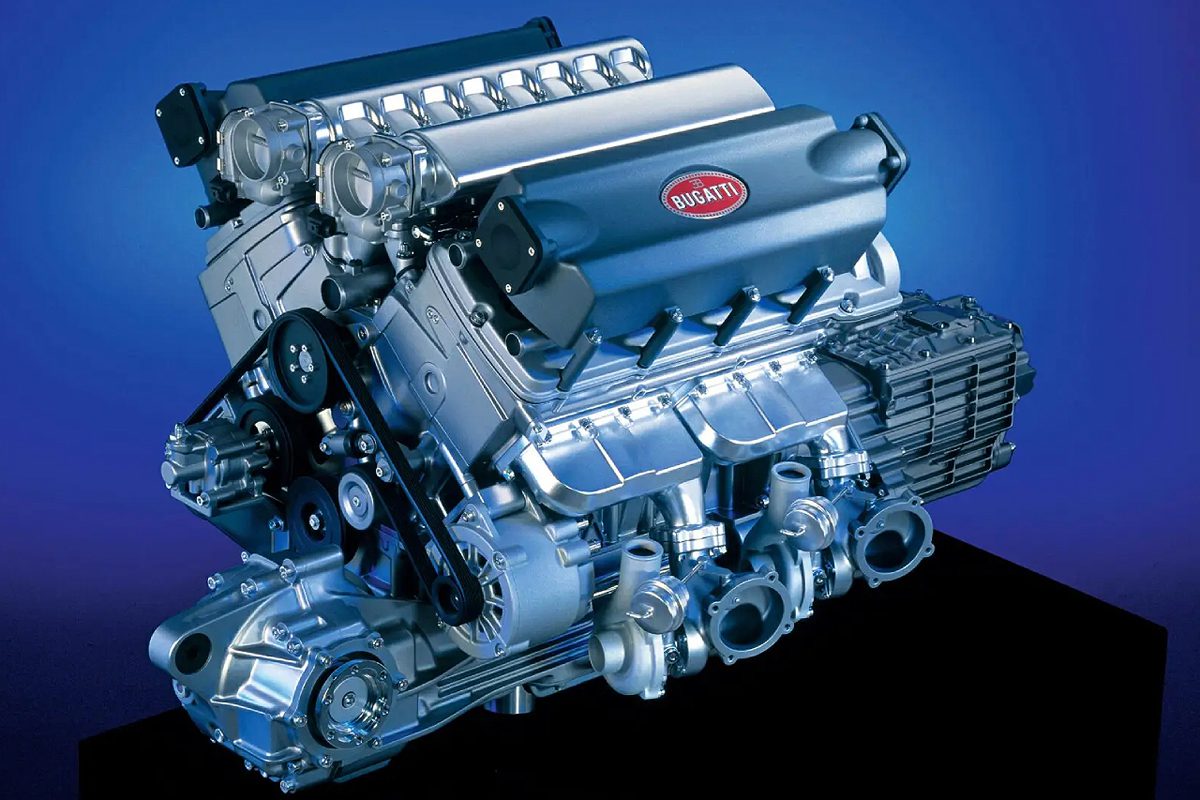
Built similarly but using two VR8-style banks—for four individual banks of cylinders—the W16 was famously found under the hoods of the Bugatti Veyron and Chiron. The quad-turbo 8.0-liter engine produced 1000 horsepower or more, depending on application.
CG Says:
The VR6 was a clever engineering solution that gave compact front-drive cars real six-cylinder character and is still respected by VW-brand enthusiasts. The engine was also the building block for a family of luxury and performance engines, seeing use in such brands as the aforementioned Audi, Bentley, and Bugatti.
Listen to the Car Stuff Podcast
Volkswagen VR6 Pictures Pictures
(Click below for enlarged images)
Fahrvergnügen (and 4 Other Obnoxious Automotive Marketing Terms)
Owned a 1995 Jetta GLX 5-speed. Honey of an engine. Good torque, loved to rev.