
 Text by Tom Appel
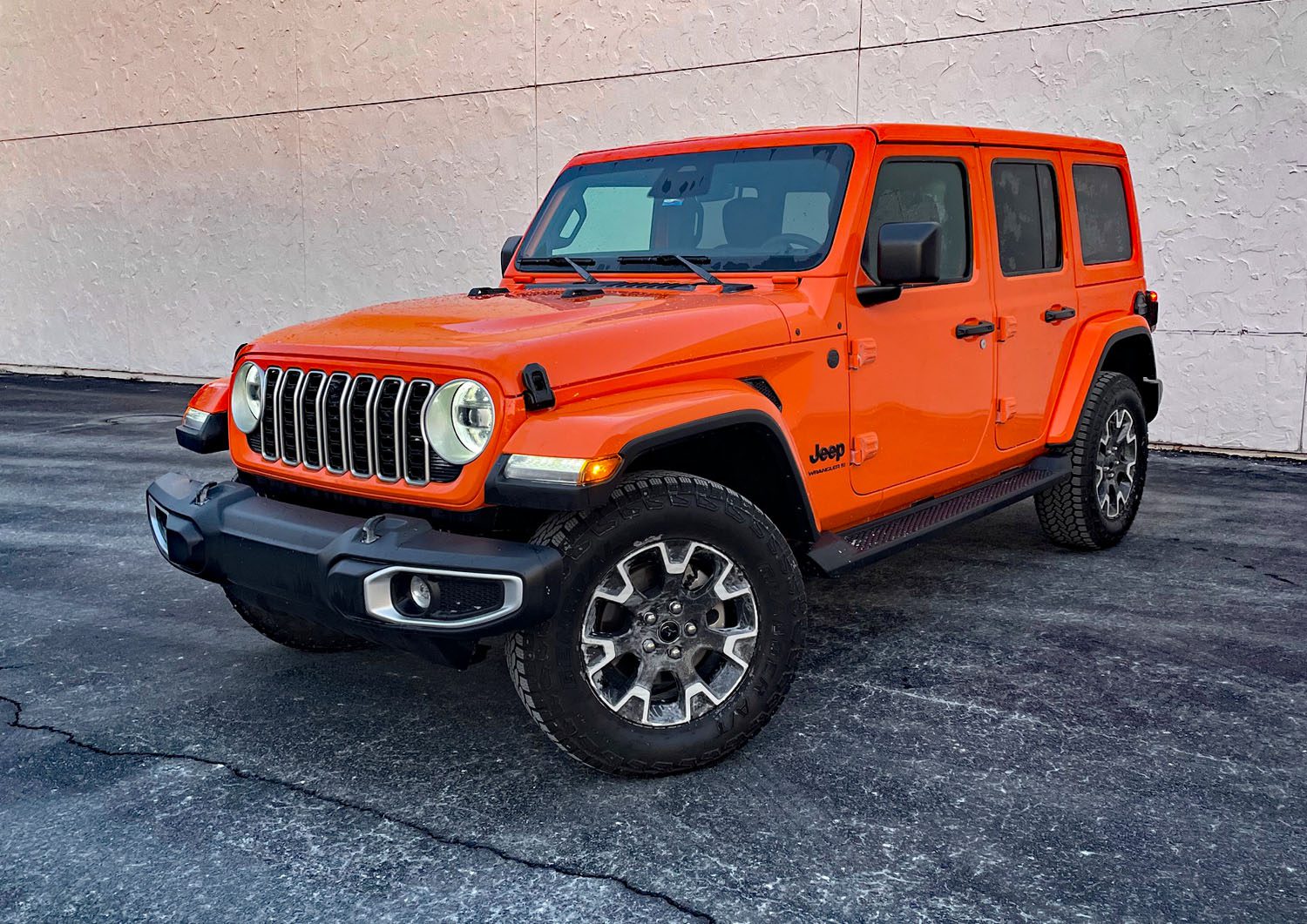
2025 Jeep Wrangler 4-Door Sahara 4X4
Specs
Class: Compact Crossover
Color: Joose
Country of manufacture: U.S.
Seating capacity: 5
Miles driven: 137
Real-world fuel economy: 20.1 mpg
| CG Report Card | |
|---|---|
| Room and Comfort | B |
| Power and Performance | B+ |
| Fit and Finish | B |
| Fuel Economy | B |
| Value | C+ |
| Report-card grades are derived from a consensus of test-driver evaluations. All grades are versus other vehicles in the same class. Value grade is for specific trim level evaluated, and may not reflect Consumer Guide's impressions of the entire model lineup. | |
| Big & Tall Comfort | |
| Big Guy | C+ |
| Tall Guy | C+ |
| Big & Tall comfort ratings are for front seats only. "Big" rating based on male tester weighing approximately 350 pounds, "Tall" rating based on 6'6"-tall male tester. | |
| Drivetrain | |
| Engine Specs | 270-horsepower 2.0-liter |
| Engine Type | Turbocharged 4-cylinder |
| Transmission | 8-speed automatic |
| Drive Wheels | 4WD |
Driving mix: 60% city, 40% highway
EPA-estimated fuel economy: 20/22/21 (city, highway, combined)
Fuel type: Regular
Base price: $49,370 (not including $1995 destination charge)
Options on test vehicle: Special paint ($895), Trailer Tow and Auxiliary Switch Group ($1195), Sahara Popular Equipment Group ($2995), Body Color 3-Piece Hard Top ($1995), Hard Top Headline ($655), all-weather mats ($170), all-terrain tires ($495), 18-inch alloy wheels ($1095)
Price as tested: $60,860
Audio-System Brand
Audio-System Quality
Poor Fair Good Very-Good Excellent
Pros and Cons
The great: Fun to drive, sporty character, open-air fun
The good: Fuel economy
The not so good: Noisy cabin, inconvenient climb up into cabin, pricey options
Review
For years, the only engine available in Jeep’s popular and terrain conquering Wrangler SUV has been a 3.6-liter V6. And, the “Pentastar” engine has served Wrangler owners well, with sufficient low-end torque for quick stoplight getaways and for low-speed off-road rock crunching.
The smooth six has also helped the blocky and somewhat heavy Wrangler in the fuel-economy department, returning better mileage than any Jeep owner could have reasonably hoped for.
Engines
The six is no longer the only engine available in the Wrangler, however. Excluding the big 6.4-liter V8, which is offered only in special versions of the Wrangler, there is also a humble sounding 2.0-liter turbocharged 4-cylinder engine, and it is now standard on certain versions of the Wrangler, including the popular Sahara.
Rated at 270 horsepower, the 2.0-liter engine seems, at least on paper, subordinate to the 3.6-liter, which is rated at 295 horsepower, and can be had as a $500 upgrade. But we’re going to suggest you stick with the four. Here’s why:
Though good for fully 25 less horsepower than the V6, the 2.0-liter engine produces considerably more torque, and that low-end power comes on sooner in the rev range, making for a much more satisfying drive experience.
Horsepower versus Torque
The little turbo cranks out 295 pound-feet of torque, versus just 260 for the V6. More impressive, the turbocharged engine delivers its peak torque at just 3000 rpm, much sooner than does the V6, which doesn’t achieve peak torque output until 4800 rpm.
This makes the 2.0-liter engine the more-satisfying powerplant, delivering 0-60 mph times that are, according to most reporting outlets, at least a second quicker in the wrangler than does the V6.
For these reasons, we do not recommend popping for the optional V6. Note that both the four and V6 are fitted with versions of the maker’s eTorque mild-hybrid system. The systems provides additional power when pulling away from a stop, and also contributes to the smoothness of the engine’s stop/start system.
Prices and Trim Levels
Before we share our drive impressions of the Wrangler, let’s look at the 2026 trim-level lineup:
- Sport ($36,980)
- Sport S ($41,235)
- Willys ($4,710)
- Rubicon ($47,965)
- Sahara ($50,890)
- Willys ’41 ($51,085)
- Rubicon X ($59,315)
- Moab 392 ($82,780)
The Moab 392 is basically a stylistic update of the Rubicon 392 which was offered for 2025. Also, of all the models available for ’26, only the Sport, Sport S, Willys, and Rubicon X can be had in 2-door guise. Prices above are for 2-door models where available.
Special Editions
Jeep promises no less than a dozen special-edition Wrangler models in 2026, which will likely manifest as packages offered on the Sport, Sport S, or Sahara. The special-editions are set to roll out at roughly monthly intervals throughout the year.
Goodbye, Plug-in Hybrid
Changes to the wrangler for 2026 are few, save for the late deletion of the plug-in hybrid “4Xe” powertrain options. In fact, Stellantis has killed the plug-in hybrid options from all of its Jeep models, as well as from the Chrysler Pacifica.
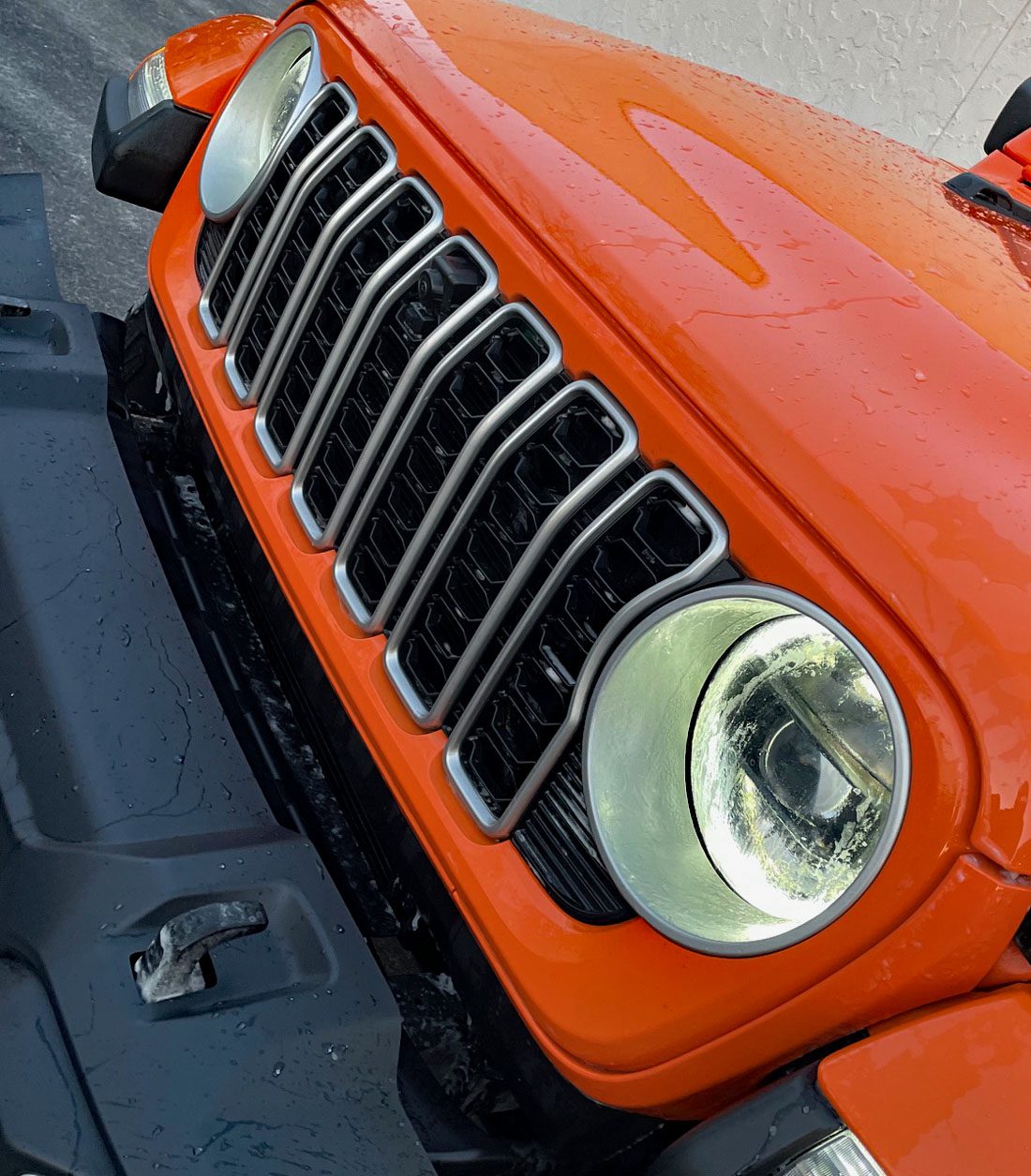
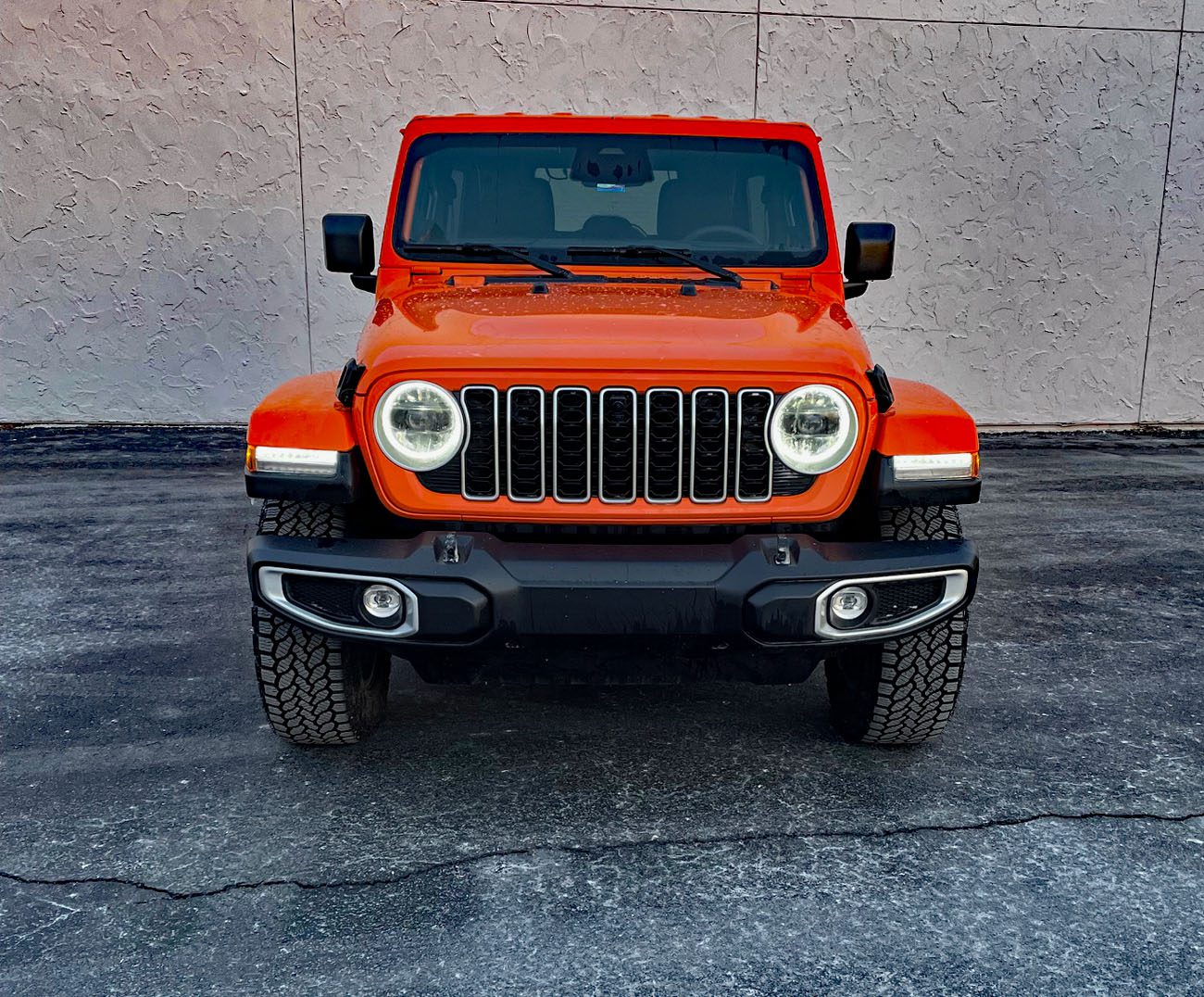
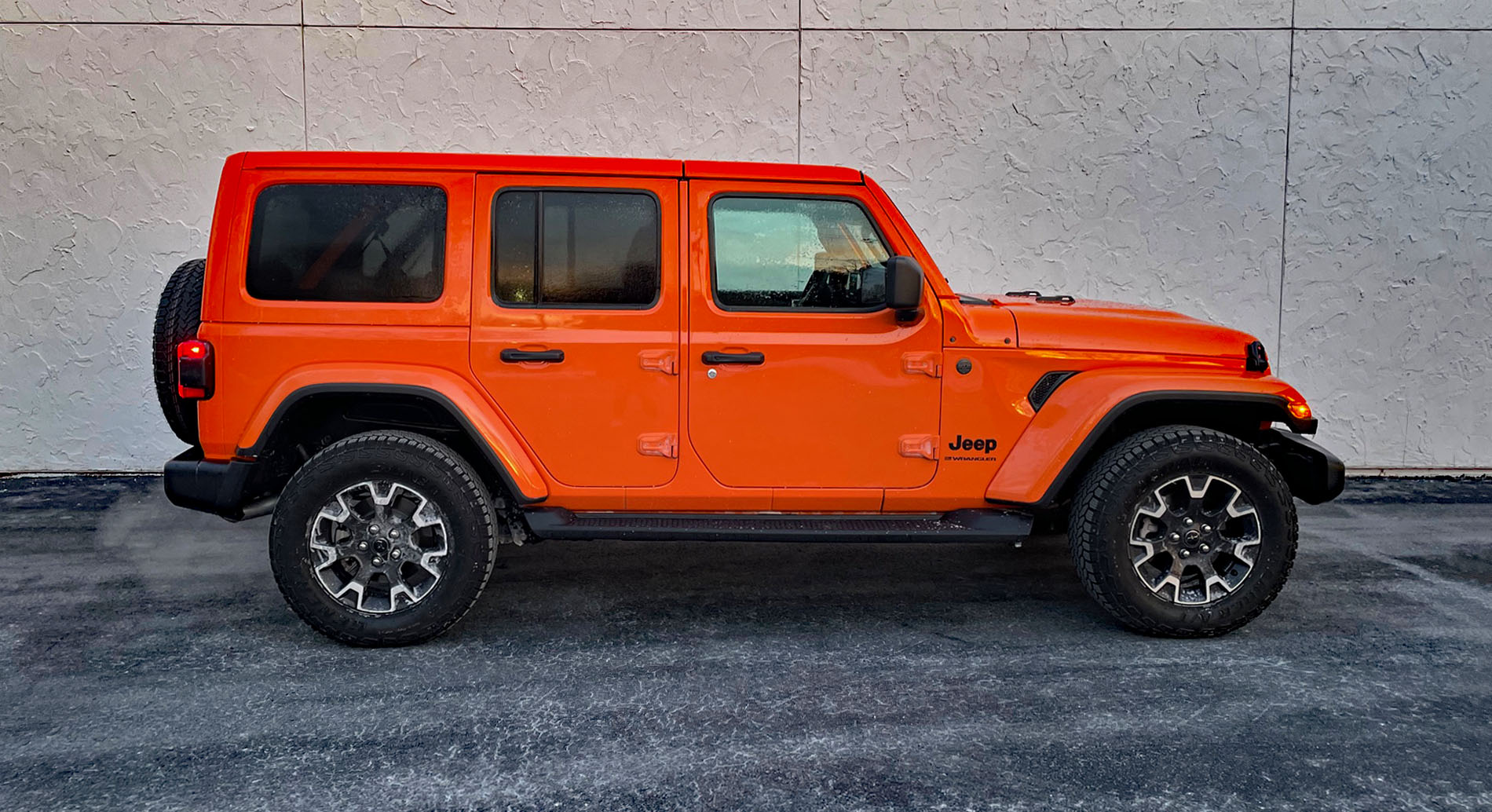
Consumer Guide recently spent a week with a 2025 Wrangler Sahara equipped with the 4-cylinder engine and eye-catching extra-cost Joose paint. All told, including destination charge, our test car came to $60,860 including destination charge.
Here we’d like to share five of our favorite things about the new Wrangler. Read on…
Five Cool Things about the 2025 Jeep Wrangler Sahara
Fun to Drive
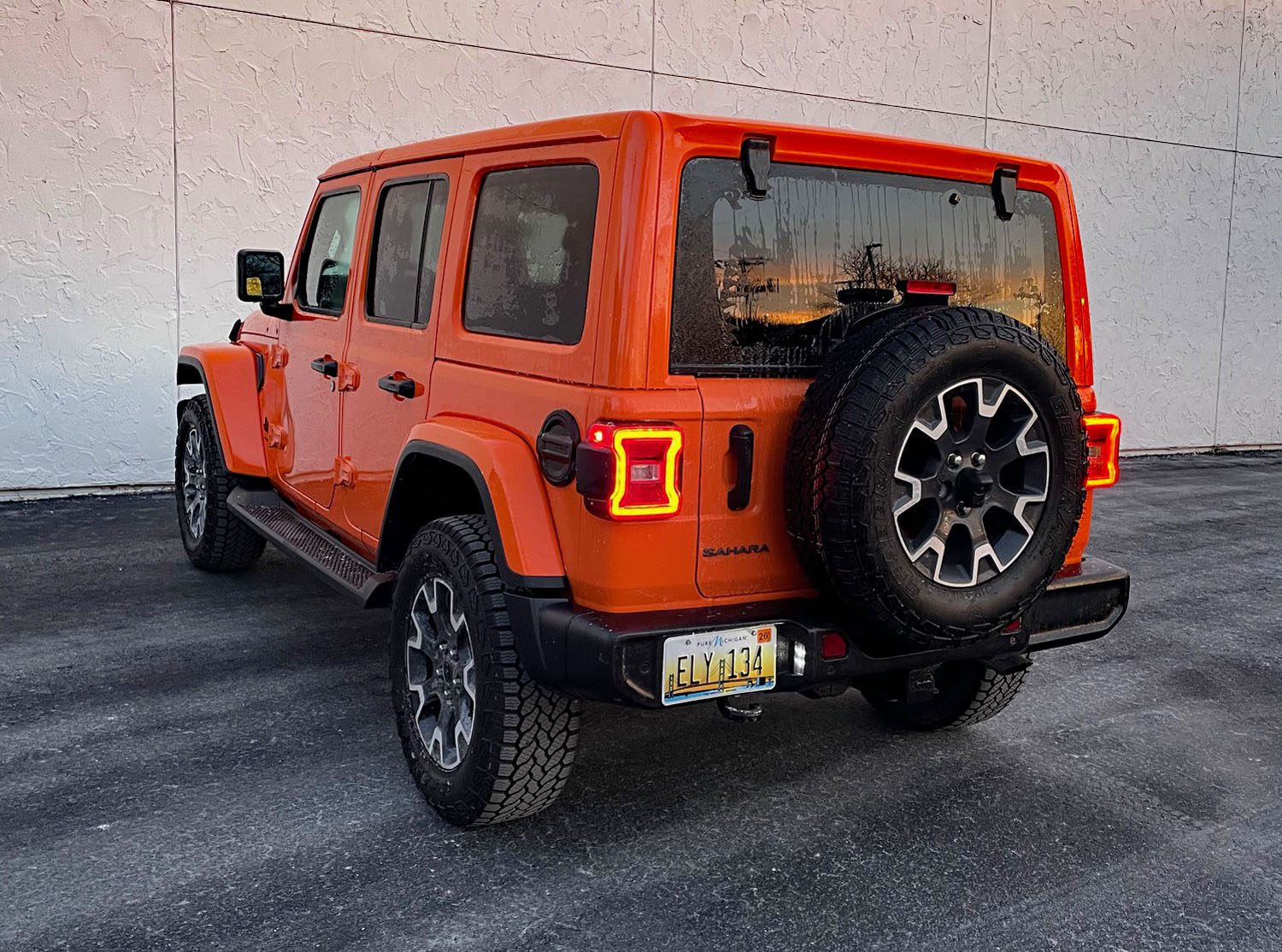
The turbocharged four pairs well with the generally gritty Wrangler drive experience. The engine revs quickly, imparting a sporty feel, and sounds good in the process. The engine can also be felt when pushed, which suits this visceral Jeep well, though might seem out of place in a more refined vehicle.
The 4-cylinder also pairs well with the Jeep’s excellent 8-speed automatic transmission, which clicks off timely shifts with smooth authority. Compared to the available V6, the four is the more-rewarding engine, especially in around-town driving.
Relatively Efficient
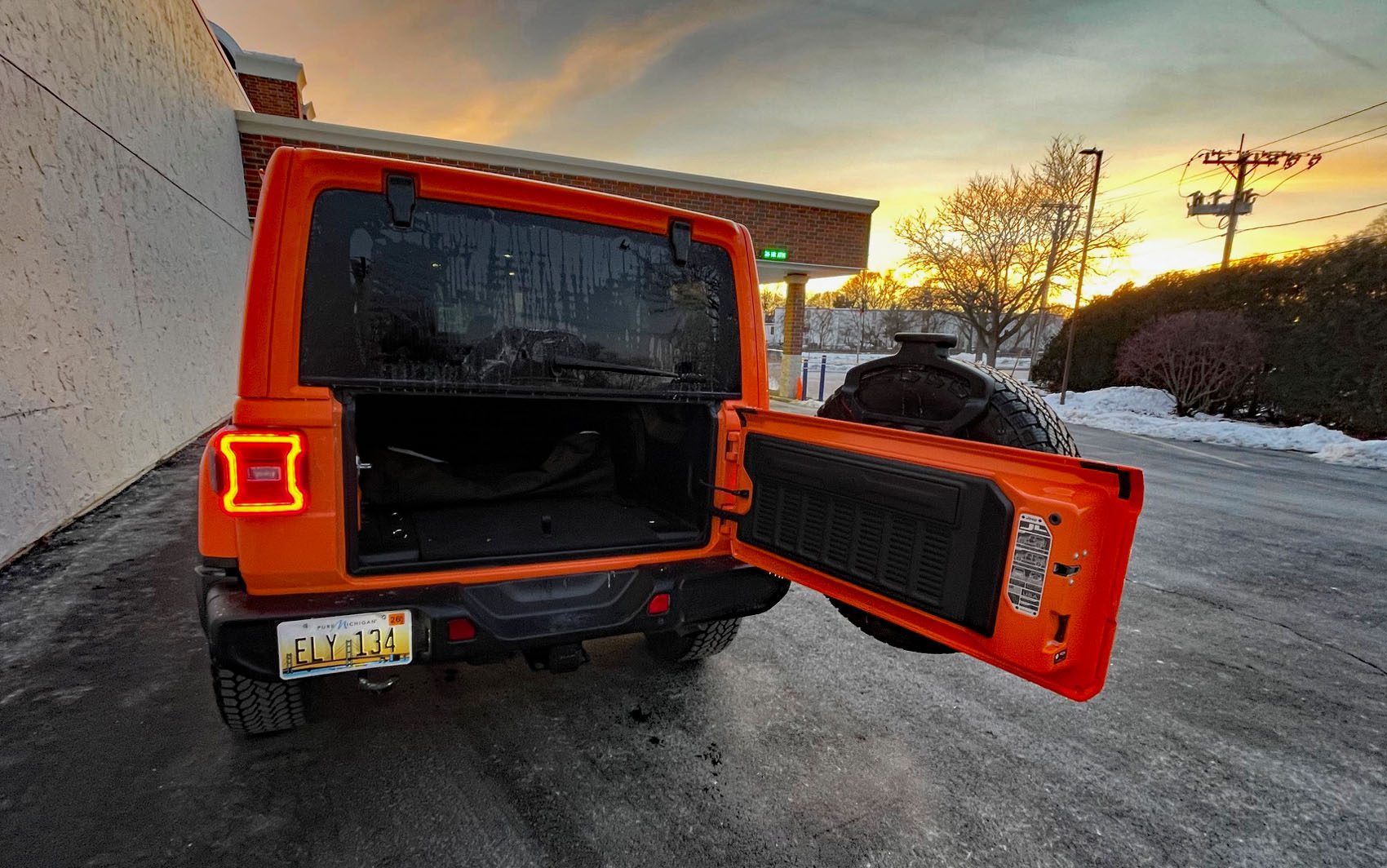
Excluding the short-lived diesel engine once offered in the Wrangler, the 4-cylinder is the most-efficient powertrain options we’ve evaluated. In more-or-less routine driving, we saw 20.2 mpg, besting test V6 Wranglers we’ve reviewed by 2-4 mpg.
Snow Conquering
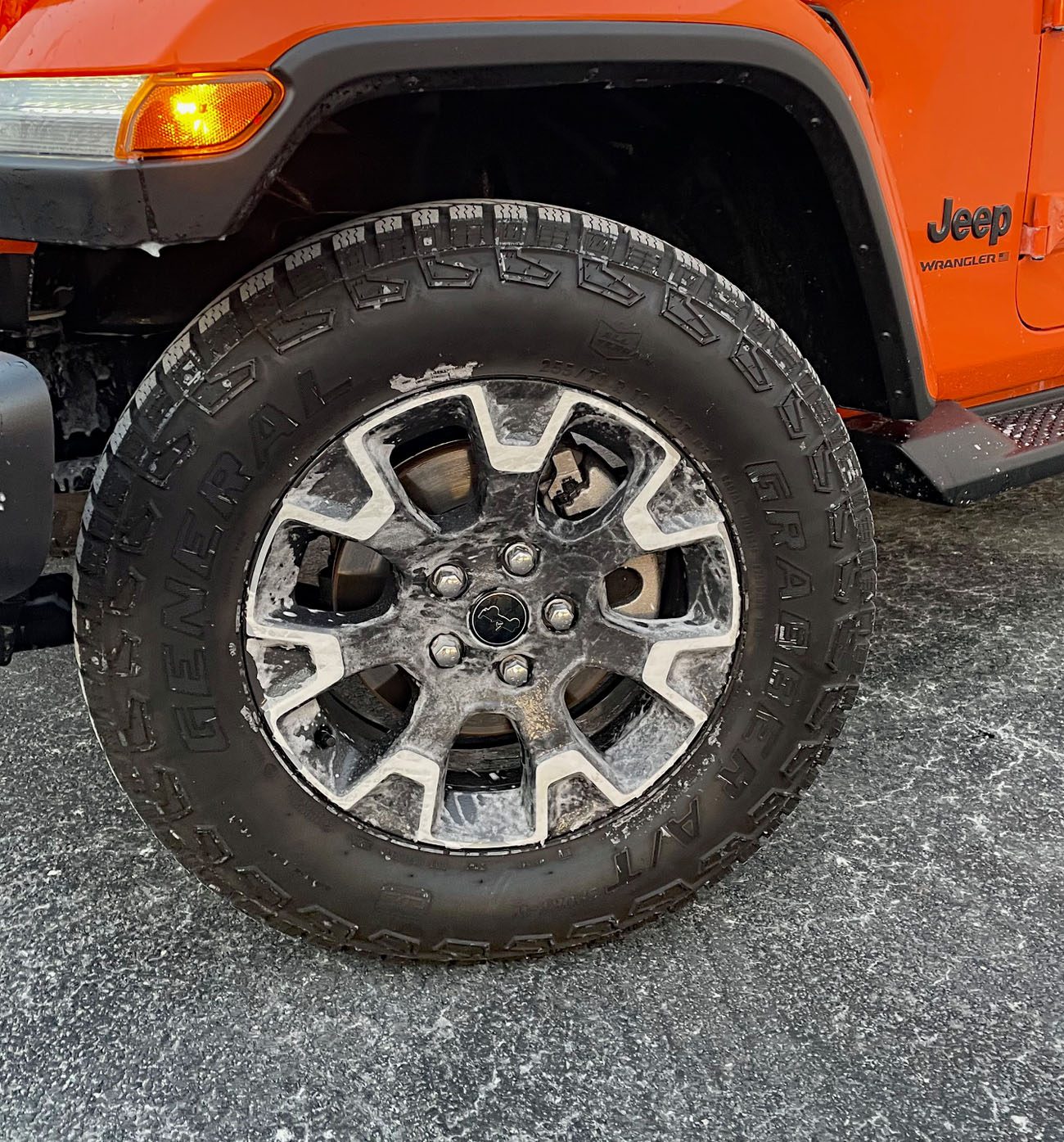
Though we did not drive this test car through any serious snow, we’ve enjoyed the services of Wranglers during periods of inclement weather over the years, and few vehicles conquer snow like these rugged Jeeps. If you’re a resident of the Snowbelt, here one more reason to consider a Wrangler.
Seals up Nicely
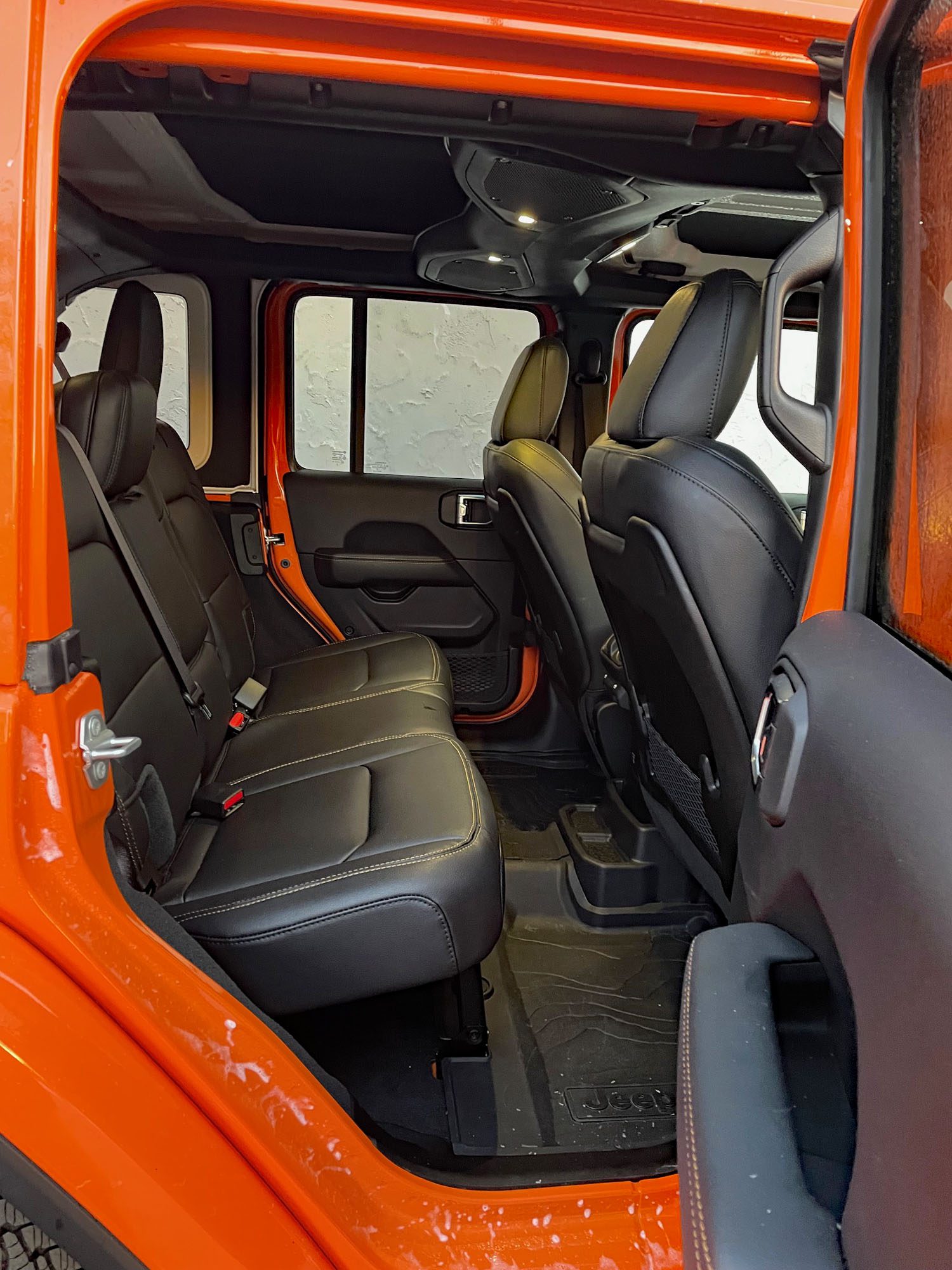
Here in the Chicago area, we’re dealing with one of the most extreme cold snaps of the decade. Having owned a soft-top Jeep (a 1977 CJ-7), I can tell you that the summertime fun an open-air a Jeep affords owners can be offset by the poor thermal protection provided by a canvas top.
Fortunately for modern consumers, the Wrangler can be had with a 3-piece hardtop which can be removed easily enough, and seals the cabin tight as a drum when the cold comes. Our test-car’s body-color removable roof listed for $1995, which feels like money well spent to us.
Legitimate Off-Roader
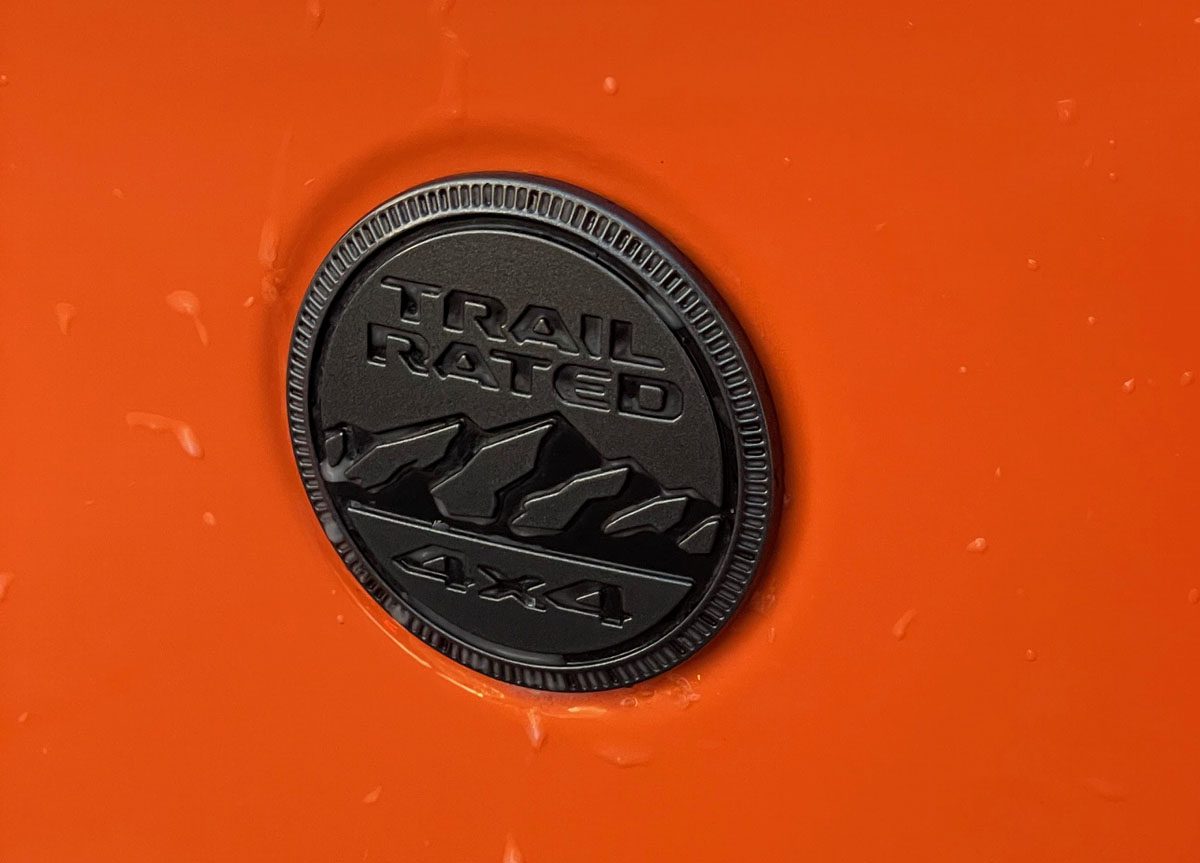
The Wrangler has few peers when it comes to off-road prowess, and we heartily recommend finding a way to enjoy your Jeep’s trail-ready nature. Having a vehicle that can best any winter storm is nice, but that’s also a little too practical. Locating an off-road course to enjoy with the Wrangler’s top off, well, that’s really what owning this vehicle is all about.
Listen to the Car Stuff Podcast
2025 Jeep Wrangler Sahara Pictures